The Sacred Medicine of Cacao - A Journey Into The Heart
Cacao ( Theobroma cacao) is a miracle food. Food of the Gods. Food of the people. Soul food supreme. A divine ambrosia of both aroma and flavor and this is just the entry point into a mysterious transformational power cacao holds far beyond what the senses can even capture. I have been going deep with this sacred rainforest friend lately and am so inspired by its magic and multi fold gifts I had to write about it. At the Flower Power Project it is always my greatest hope to give the flora a platform to sing their gifts. To tell their story.
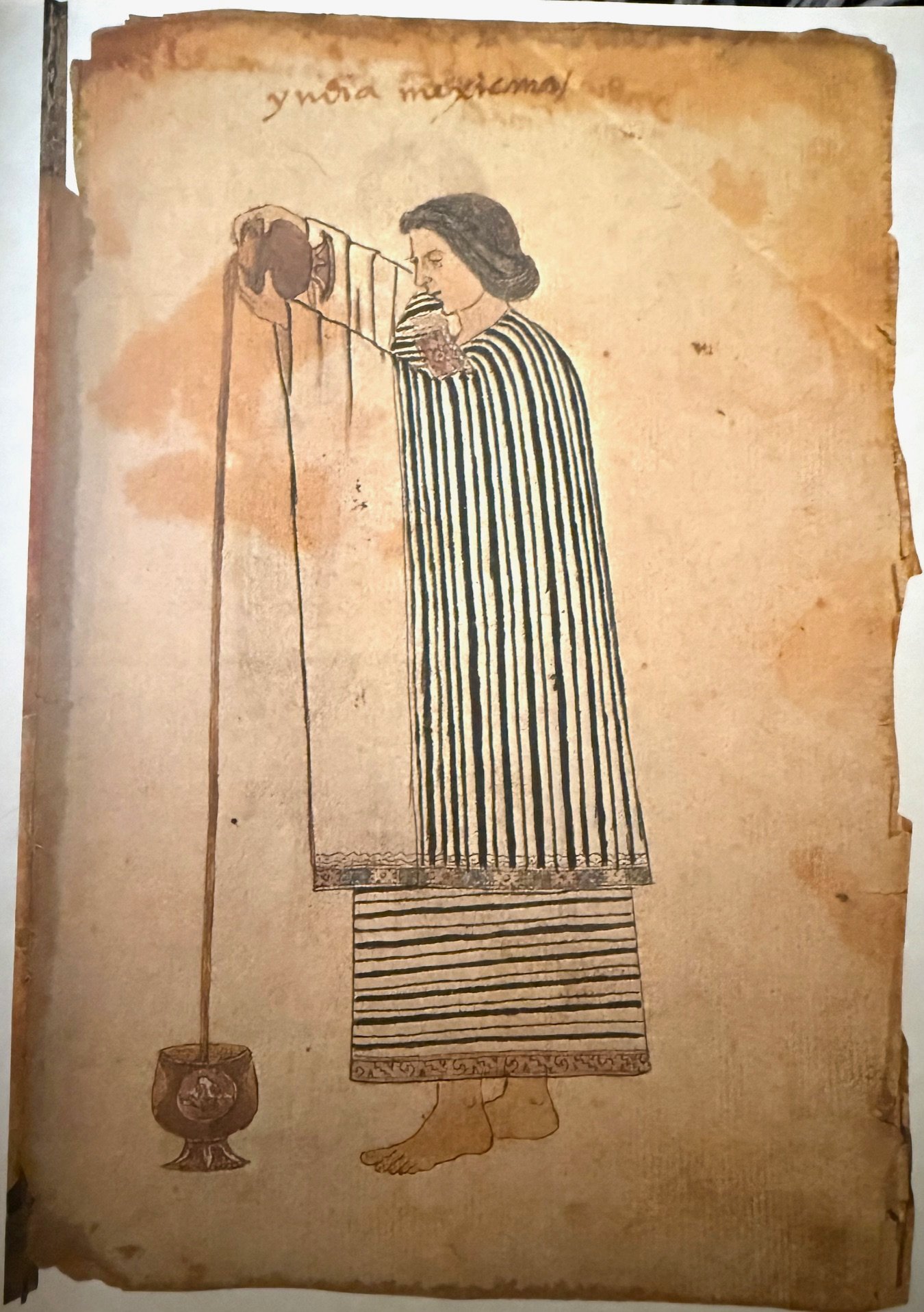
illustration from the 16th-century Codex Tudela depicting an Aztec woman preparing drinking cacao.
So I have compiled some wonderful books at my feet, a good house music set, and a cup of Peruvian drinking cacao. I am excited to see what we can do here. As a herbalist in a time of AI generated herb books, I must admit that I am also increasingly compelled to offer well resourced information to the interwebs about this botanical treasure. So this is not a short blog post. I have no idea how to do that when it comes to plants. : ) But I am most delighted to take us on a journey into the world of a most sacred plant ally. There is so much to learn.
I am grateful to have an extraordinary resource here on my lap, The New Taste of Chocolate by Maricel Presilla, a culinary historian, whose text I will draw on alongside other ethnobotanical knowledge about cacao from Richard Evans Schultes, Christian Rätsch and other thorough and disciplined sources as we dive deep here. I recommend Presilla’s amazing book, which includes beautiful recipes for chocolate lovers and for anyone interested in the history of cacao and chocolate. It is an epic tale. And the story of cacao is not all romance and mystery. Colonialism, slavery and ecological destruction play a large hand in this precious bean’s cultivation and commodification. But this is why we share the truth, no? We truly hold great power in how we come to know plants, how we spend our money on them and whom we procure plants and plant medicines from. The diverse collection of chocolate bars we find in our stores tell stories from around the world. Much can be said here, but I will not dwell.
It goes without saying that we live in turbulent, volcanic times that demand tremendous courage, vision, strength and above all, love and compassion. Our ability to survive and thrive will depend on how well we grow, adapt and evolve now. And amazingly…by grace and nature’s loving hand, we are given the tools to help us through. Cacao is one such sacred tool…more of an ally to be sure.
While we humans have mostly known chocolate over the centuries as a blissful confection of delectable nuance, it is the Indigenous peoples of the Amazon Basin in South America, Central America and Mexico, who I think, could help us get to know cacao more deeply again. They have stewarded cacao for thousands of years and know it as a sacred teacher and a medicine of the heart and spirit that has the capacity to guide us through transformation, change, healing and awakening.
Cacao is also a medicinal and nutritional powerhouse and has a prominent place in our wellness practices that is as singular as it is spectacular. Its health benefits are awe inspiring. Rich in antioxidants, heart healthy flavonoids, fascinating alkaloids, mood enhancing compounds and essential minerals, cacao supports vitality, emotional balance and cognitive clarity. It is a true tonic for body, mind and soul and an ancient superfood that fuels both pleasure and profound wellness.
With joy, I invite you to join me on a journey into the sacred path of this tree alongside humanity. It has traveled far and made its way all around the globe. And for good reason. Theobroma cacao is a holy plant medicine, a trusted vitality booster and a doorway plant guiding us to meet ourselves and our planet more fully. Through cacao (and other plants), I believe we can step into new levels awareness, balance, wellness, compassion, joy and bliss. She is a medicine of the heart, nourishing us deeply, offering strength, presence and courage to face what lies ahead as one world ends and another begins.
The Deep Origins- Amazonian Birthplace and Ethnobotanical Roots
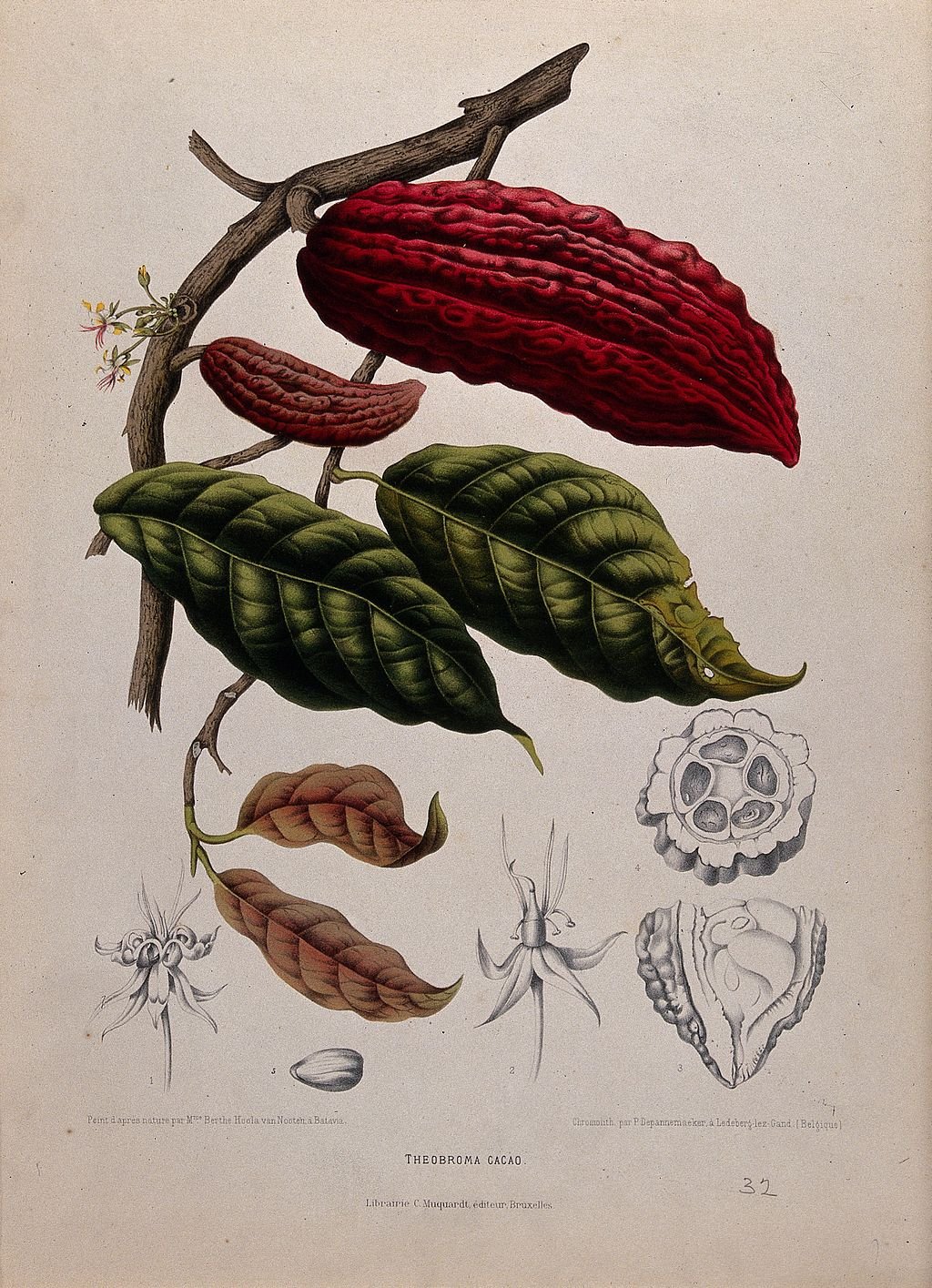
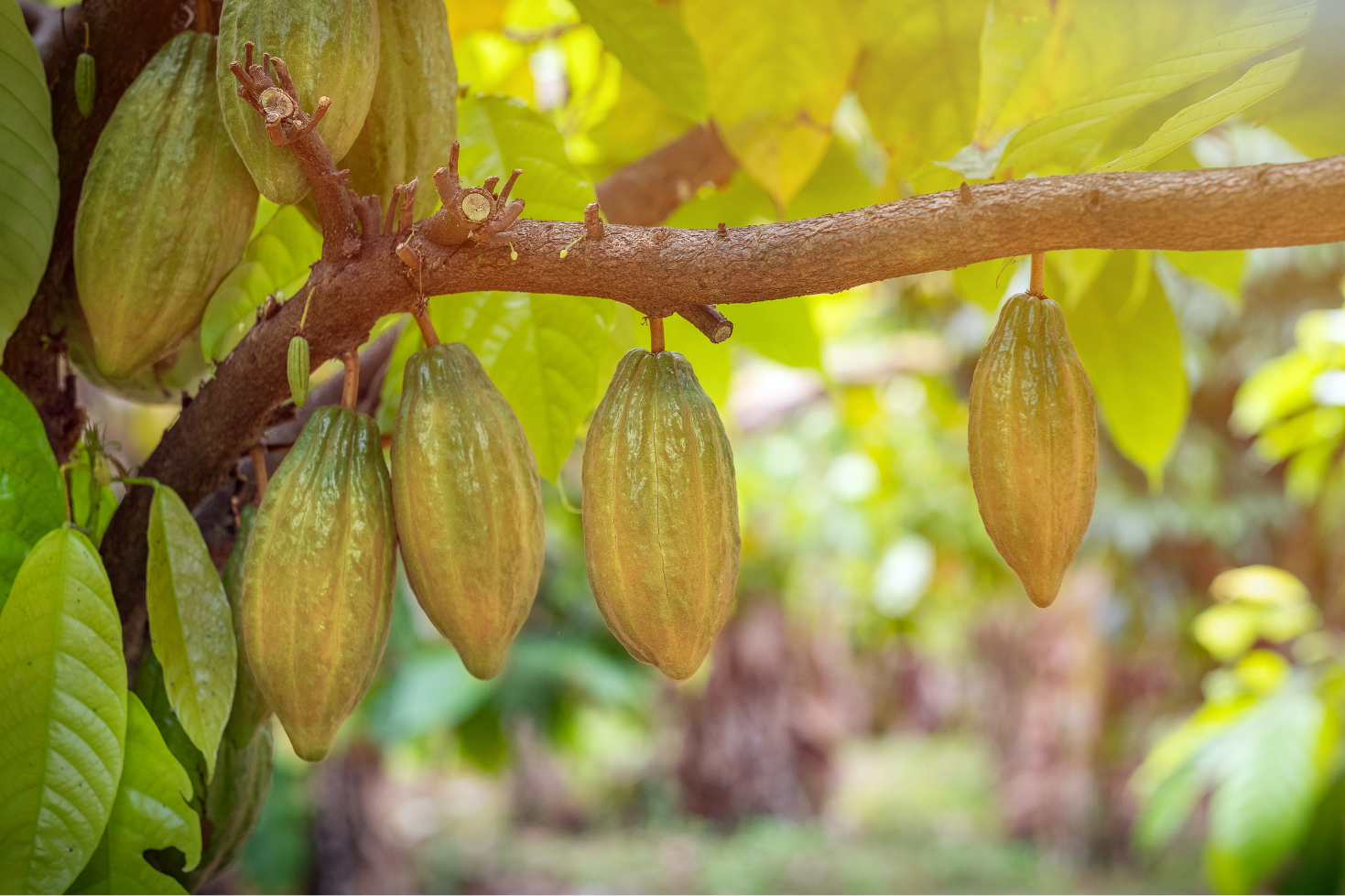
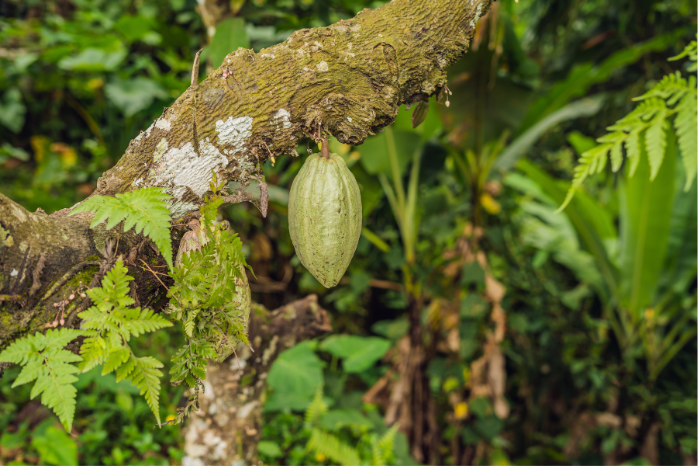
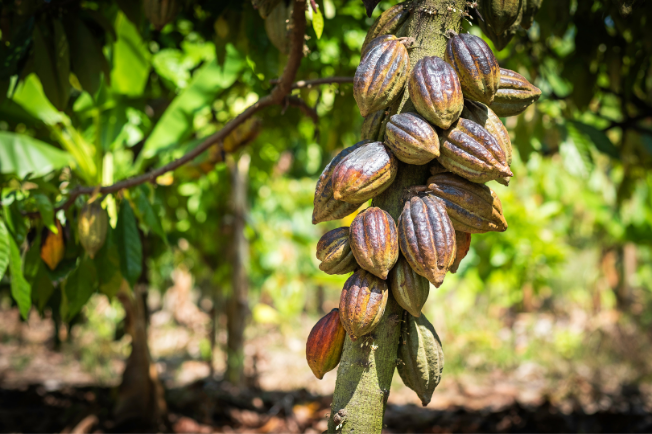
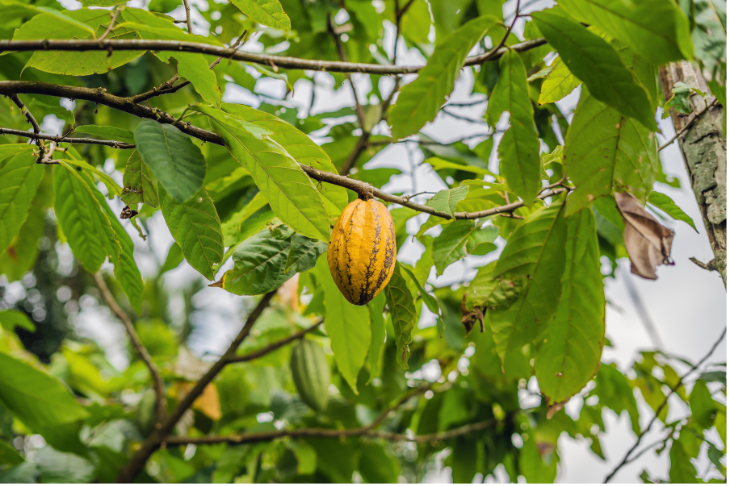
Cacao’s story begins millions of years ago as a tropical understory tree species native to the humid, shaded environments of the Amazon rainforest. Adapted to thrive beneath the dense forest canopy, Theobroma cacao exhibits morphological traits such as broad, glossy leaves optimized for capturing filtered sunlight, flowers & fruits that grow directly on the trunk and older branches. This is a phenomenon known as cauliflory. This adaptation facilitates pollination primarily by specialized midges that dwell in the forest understory. Cacao flowers are small, delicate, and require precise pollination that only these unique insects can provide.
Botanical Illustration of Theobroma cacao by Berthe Hoola van Nooten. “Fleurs, fruits et feuillages choisis de la flore et de la pomone de l'Ile de Java, peints d'apres nature” 1880
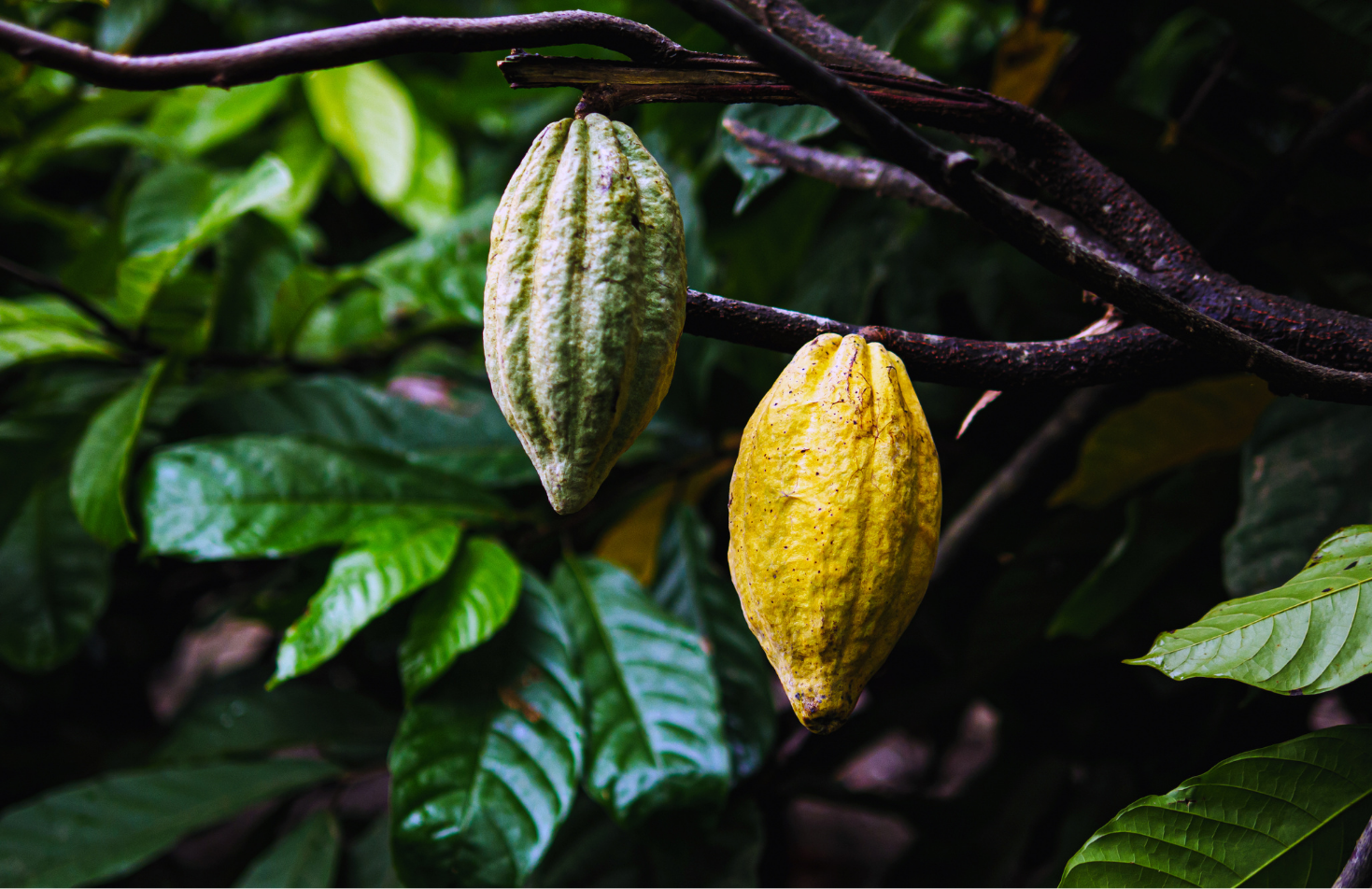
Fossil evidence and molecular phylogenetic studies trace Theobroma’s lineage back approximately 20 to 30 million years (It is not agreed upon), situating cacao within the Malvaceae family, which includes hibiscus and cotton. Its evolution is tightly linked to the complex ecological web of the Amazon, where coevolution with pollinators and seed dispersers shaped its reproductive success. The genus Theobroma, to which cacao belongs, comprises around 20 species primarily native to the tropical regions of South America and spread into Central and Meso America. The most well known species, Theobroma cacao, is the source of the chocolate we cherish, but several wild relatives, such as Theobroma grandiflorum (cupuaçu) and Theobroma bicolor, also grow naturally in the Amazon rainforest. These wild species play important ecological roles, often relying only on animals and insects for pollination and seed dispersal, which helps maintain the diversity and resilience of their ecosystems and the trees themselves. Theobroma bicolor is thought to be the long lost cousin of Theobroma cacao. This variety is nicknamed Jaguar Cacao because the white green hue and texture of its dry pods resemble the fur of a jaguar.
Cacao’s relationship with humans as a cultivated and sacred plant began roughly 3,500 to 4,000 years ago. Chemical residue analysis from pottery shards in the upper Amazon basin…modern Ecuador and Peru, reveals some of the earliest confirmed cacao use. Researchers like D.J. Henderson et al. (2007) detected theobromine and caffeine residues, chemical markers unique to cacao, dating back millennia. Genetic studies by Motamayor et al. (2008) have mapped cacao’s genetic diversity, confirming the Amazon basin as the cradle of cacao domestication, with multiple genetically distinct varieties adapted to microclimates and ecological niches.
Ancient names for cacao reflect its deep cultural roots across Indigenous civilizations. The Aztec people, speaking Nahuatl, called it kakaw or cacahuatl, meaning “bitter water,” while the Maya also used the term Kakaw in their language and hieroglyphs. The Aztecs referred to the traditional frothy cacao drink as xocoatl, combining words for “foam” and “water.” Early European explorers recorded the term Tchocoa, derived from Indigenous languages, which eventually influenced the modern word “chocolate.” Botanically, cacao was named Theobroma “food of the gods” by Swedish botanist Carl Linnaeus in the 18th century, honoring its revered status. Additionally, some Indigenous groups in Central America use the term Nacatamale (debated) to describe ceremonial cacao preparations.The Shipibo call it torampi. I like that one. (Ratsch, C)
Ethnobotanist Richard Evans Schultes devoted much of his life to studying the profound relationships between Indigenous peoples and plants in the Amazon rain forest. His extensive fieldwork revealed that Theobroma cacao was deeply intertwined with the lives of Amazonian Indigenous communities. Schultes helped the West understand that for these peoples, cacao is a sacred plant medicine embedded in their cosmologies, spiritual practices, healing arts, and social structures.Schultes conducted fieldwork among various Indigenous groups in the Amazon basin, including the Shipibo-Conibo, Asháninka, Ticuna, Huitoto, Shuar, and Kichwa (Quichua). These communities cultivate cacao as a food source and as a sacred medicine woven into ritual life and social cohesion.
The Shipibo-Conibo of Peru are known for their rich shamanic traditions and intricate plant wisdom. I am always fascinated by the Shipibo peoples because of my own animist nature. The Shipibo view the forest as a living, sentient being filled with spirits. Plants, animals, rivers, and the earth itself are respected as sacred entities that communicate through visions, dreams, and songs. Cacao is used amongst the Shipibo-Conibo ceremonially to open the heart, facilitate healing, and strengthen community bonds. They cultivate cacao within biodiverse agroforestry gardens beneath the rainforest canopy, maintaining the delicate balance of the ecosystem. Similarly, the Asháninka, one of the largest Indigenous groups in the Peruvian and Brazilian Amazon, integrate cacao into their medicinal and ritual practices. For these peoples, who listen closely to the earth, cacao is a living being and spiritual ally connecting them to the forest and their ancestors.
The Ticuna and Huitoto peoples, inhabiting regions of Colombia, Brazil, and Peru, also honor cacao’s sacred status. Their cultivation methods emphasize harmony with the forest, preserving biodiversity and ensuring cacao’s role as a medicine and gift from the natural world. The Kichwa, primarily in Ecuador and Peru, have a cultural heritage deeply intertwined with the rainforest. For them, cacao is a sacred medicine worked with in ceremonies to connect with nature, ancestors, and spiritual realms. Their relationship with cacao is rooted in sustainable agroforestry practices that honor biodiversity and ecological balance.
Anthropologist Eduardo Kohn’s research supports this worldview, showing that Indigenous Amazonian peoples perceive plants like cacao as sentient beings with agency rather than passive objects. This relational perspective invites us to engage cacao as a living participant in a network of life…a teacher and healer co-creating wellbeing for those who imbibe.
Schultes documented that cacao cultivation was never isolated as a monoculture. Indigenous peoples cultivated cacao within biodiverse agroforestry systems beneath the forest canopy, preserving ecological balance, maintaining soil health, and fostering a living landscape where cacao thrives alongside medicinal and useful plants. These systems exemplify a holistic worldview that sees humans and plants as interdependent participants in a dynamic ecosystem. Shultes was a passionate conservationist as well as deeply fascinated by the indigenous wisdom he was a lifelong student of. These diverse agroforestry practices were ones he deeply aligned with. I would concur as a student learning the benefits of agroforestry systems myself.
Through Shultes work, it seems clear to me that cacao was revered greatly and with tremendous intention and respect which was central to rituals and healing ceremonies. Its cultivation was thoughtful and ritualistic. Schultes observed that cacao’s role extended to social cohesion, with its preparation and consumption marking communal gatherings, rites of passage, and spiritual ceremonies that reinforced cultural identity and connection to the natural world. The plant was revered as a living ally, a teacher, and a medicine nourishing body, mind, and spirit.
This reverence continues among many Indigenous peoples today, reminding us to honor the sacred ways cacao may be asking to be worked with. Cacao’s value transcends culinary appeal, anchoring it firmly within a relational ecology where cultural, spiritual, and environmental dimensions converge.
The Journey North: Olmec, Maya, & Aztec Peoples
Central America & Mexico
Central America is widely recognized as the cradle of ancient cacao cultivation, encompassing modern day Mexico (N. America), Guatemala, Belize, Honduras, El Salvador, and Costa Rica. This region was home to powerful civilizations such as the Olmecs, Maya, and later the Aztecs. Archaeological evidence from these countries, including cacao residues found in pottery dating back over 3,000 years reveal cacao’s central role in their diets and ceremonies. The Maya, flourishing during the Classic Period, developed sophisticated methods for processing cacao into frothy, spiced beverages consumed by nobility and used in rituals. Centuries later, the Aztecs inherited and expanded these traditions, elevating cacao to a symbol of wealth and divine favor, often flavoring their chocolate drinks with vanilla and chili.
Indigenous peoples such as the Ch’orti’ Maya in Guatemala and Honduras, the Q’eqchi’ Maya in Belize and Guatemala, various Nahua-speaking groups in Mexico and El Salvador, and the Bribri of Costa Rica and Panama also have long-standing cultural connections to cacao. These communities continue to honor cacao as a sacred plant, integrating it into ceremonies, traditional medicine, and sustainable agroforestry practices.
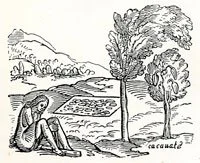
16th century engraving showing the ‘Cacahuate’ cacao tree, beside a shading tree along with cacao beans drying in the sun . This demonstrates indigenous agro forestry practices utilized in pre colonial cacao production.
Trade Routes
The trade route that brought cacao from its origin in the Upper Amazon basin to the Maya and other Mesoamerican cultures passed through the Amazonian Riverine Route, the Andean Highland Route and the Colombian Corridor Trade Route starting in the eastern slopes of the Andes in Colombia and Ecuador. These regions being rich in wild cacao populations where goods traveled northwest along river systems and overland trails through Colombia toward the Caribbean coast. From northern Colombia and Panama, established trade networks extended into Central America, eventually reaching the Maya. Coastal and riverine Indigenous groups in these areas acted as intermediaries, facilitating the movement of cacao along with other valuable goods such as jade, obsidian, and textiles. This corridor was part of a vast Indigenous trade system that fostered the exchange of cacao, crops, pottery styles, technologies, and cultural practices. Can you imagine the kinds of rainforest treasures that moved through these routes???
Archaeological evidence, including cacao residues and shared artistic motifs, supports the existence of these ancient routes. Through these interconnected pathways, cacao seeds, cultivation knowledge, and cultural significance spread northward, enabling the Maya to adopt and develop cacao as a central element of their agricultural and ceremonial life. From its Amazonian roots, cacao continued to spread northward through trade networks, reaching Mesoamerica by aprox 1500 BC. The Olmec civilization, considered the “mother culture” of Mesoamerica, was the first to cultivate cacao in the Gulf Coast region of Mexico. Archaeological evidence, including cacao residue in Olmec pottery, confirms its ritual and social importance.
For a long time it was believed that cacao had originated in Central America. However, Schultes and his colleagues shifted the perspective on cacao’s origins by providing strong evidence that the true center of origin lies not in Central America but in the Upper Amazon basin, particularly the eastern slopes of the Andes in Colombia, Ecuador, and Peru. Schultes’s fieldwork in the mid-20th century documented wild and semi-wild cacao populations in this region, highlighting their greater genetic diversity and suggesting that cacao was first domesticated there before spreading northward.
Shultes taxonomy work
The 1958 monograph “A Review of the Genus Herrania “stands as a seminal contribution to tropical botany, establishing a framework for understanding cacao and its wild relatives. In this work and subsequent research, Richard Evans Schultes provided a rigorous classification of the 22 known species of the genus Theobroma and the approximately 17 species of the closely related genus Herrania. Among these, he was particularly instrumental in documenting Theobroma bicolor, known as macambo or balat, highlighting its distinct woody pod and its significance in indigenous agroforestry. This variety is often nicknamed Jaguar Cacao because the white and green, mottled surface of its dry pods resembling the fur of a jaguar. The jaguar itself holds a special place in Mayan cosmology, believed to inhabit the first level of heaven and associated with the night, caves, and the underworld. Symbols deeply intertwined with cacao’s spiritual significance. In the Mayan universe, the jaguar is revered as a powerful spiritual companion, embodying strength and mystery, much like this remarkable cacao cousin.
By meticulously mapping these populations across the Northwest Amazon, Schultes shifted the scientific understanding of cacao’s evolutionary origins from Central America to South America. His work remains foundational for modern cacao genetics, bridging rigorous taxonomic classification with the deep ethnobotanical wisdom of the indigenous cultures who first domesticated these species. He also noted that indigenous peoples had an intimate knowledge of the different Theobroma species, recognizing and naming them by site.
Despite this botanical origin, Central America remains a primary cultural cradle where cacao’s agricultural and ceremonial significance blossomed, shaping the rich heritage that laid the foundation for cacao’s enduring global importance.
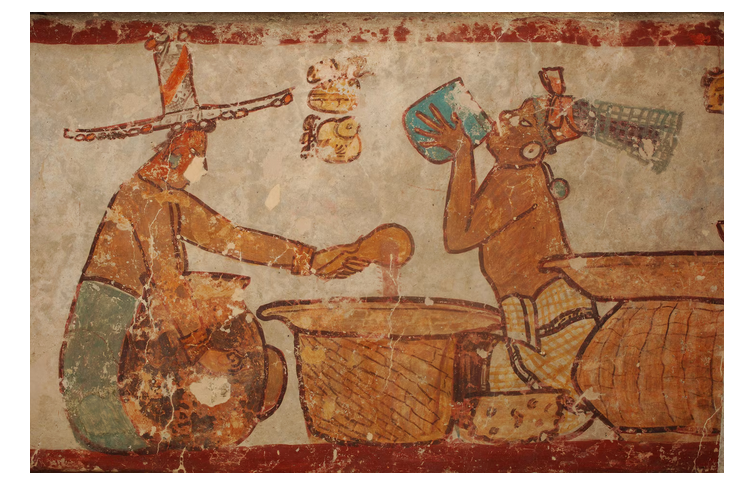
The Murals of Chiik Nahb - Depiction of Mayan market and cacao drink Structure Sub 1-4, Calakmul, Mexico
The Maya
Maya civilization (2000 BC to 1500 AD) elevated cacao to divine status, believing it a sacred gift from the feathered serpent god Kukulkan. The Maya relationship with cacao was profound and multifaceted. Cacao was revered as a sacred plant deeply woven into their cosmology, economy, and social fabric. Cacao was associated with gods and creation myths, most notably the Popol Vuh, the Maya creation story, which references cacao as a divine gift. The Maya prepared cacao as a frothy, bitter beverage often flavored with spices like chili and consumed during rituals, royal ceremonies, and social gatherings. It was considered a drink of the elite, symbolizing wealth and status, but also played a role in marriage ceremonies, funerals, and religious offerings.
Cacao was used by the Maya to bind marriage negotiations and ceremonies. Coe and Coe illustrate in their book how special a role cacao played a special role a in Mayan wedding explaining how brides and grooms would each exchange five cacao beans along with their vows to execute the contract of marriage. (Coe, The True History of Chocolate, 2013.)
Below is a depiction of an exchange of cacao beans during a marriage ceremony.
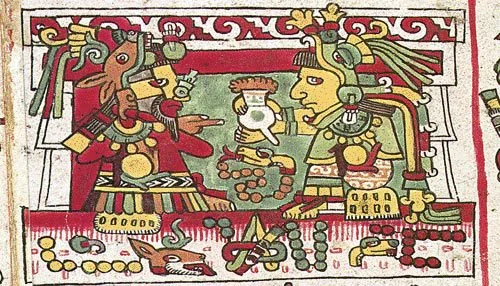
Codex Nuttall . Lady 13 Snake, and groom, Mixtec king 8 Deer “Tiger Claw” of Tilantongo. (Mixtec) 16th-century Mixtec manuscript
Agriculturally, the Maya cultivated cacao in agroforestry systems that mimicked natural forest environments, promoting biodiversity and sustainability. Cacao trees were grown alongside other useful plants, reflecting a holistic worldview that saw humans and nature as interconnected. The crop was also used as currency and tribute, underscoring its economic importance within Maya society. Maya codices as seen above and iconography depict cacao’s central role in rituals, governance, and economy. Cacao beans functioned as currency and offerings, while cacao beverages were prepared as frothy, spiced drinks in ceremonies designed to open heart and mind.
The enduring reverence for cacao among contemporary Maya communities such as the Ch’orti’ and Q’eqchi’ reflects this deep historical legacy. Today, cacao remains central to cultural identity, traditional medicine, and ceremonial life, continuing a millennia old relationship between the Maya and this remarkable plant.
Aztecs
When the Aztecs rose to power in the 14th century, they inherited and expanded upon the rich cacao traditions established by the Maya. Emperor Montezuma II was famously known to consume large quantities of cacao, believing it provided vitality, strength, and spiritual clarity. Beyond its role as a revered beverage, the Aztecs utilized cacao therapeutically to treat ailments such as fever, coughs, and digestive issues, reflecting a sophisticated understanding of its medicinal properties.
European explorers and colonists quickly recognized cacao’s cultural and medicinal significance. When Spain and Portugal began their colonization of the Americas in the late 15th century, they encountered Indigenous peoples who were already cultivating cacao with deep reverence and expertise. The Spanish, in particular, learned extensively from the Aztecs about cacao’s uses and soon established cacao plantations across Central and South America. Cacao beans were exported to Europe, where the substance rapidly became a luxury commodity enjoyed by the elite.
By the 16th century, Spanish physician Francisco Hernández documented the Aztecs’ use of cacao as a healing agent, solidifying its reputation as a powerful botanical medicine. This early recognition helped cacao transition from a sacred indigenous plant to a globally prized ingredient, intertwining cultural exchange with botanical science.
Bernardino de Sahagún and the Aztec Legacy of Cacao
Much of what we know about the Aztec people and their relationship to cacao was written by Bernardino de Sahagún, a 16th-century Spanish Franciscan friar, who meticulously documented Aztec culture in his Historia General de las Cosas de Nueva España. He described cacao as a sacred plant deeply woven into Aztec society valued as currency and as a supreme ritual beverage reserved for the king, nobles, priests, and warriors. The imperial stores also shared cacao with the warrior class where it could be sold in the public market by specialized dealers called cacahuateros. Sahagún also describes women selling pre made caco drinks. He is quoted as saying :
“She who sells premade cacao for drinking first grinds it in this fashion: At the first [grinding] she breaks or crushes the beans; at the second they are slightly more ground; at the third and last they are very well ground, being mixed with boiled and rinsed corn kernels; and being thus ground and mixed, they add water [to the mixture] in any sort of vessel [vaso]. If they add a little [water,] they have beautiful cacao; if they add a lot, it will not produce a froth. To make it well the following should be done and observed: It is well to know that [the cacao] is strained; after straining it is lifted up high so that it will pour in a good stream, and this is what raises the froth, and it is put aside. And sometimes it gets too thick and is mixed with water after being ground; and whoever makes it well makes and sells the cacao well made and beautiful, such as only the lords drink: smooth, frothy, vermilion, red, and pure, without much corn masa [I conjecture that pure and "without much masa" are synonymous]; sometimes they add many aromatic spices and even bees' honey and some pink-tinted liquid”- (translation offered by Presilla)
He also documented nine different chocolate drinks served to the Aztec emperor. These included green cacao pods, honeyed chocolate, flowered chocolate, flavored with green vanilla, bright red chocolate, huitztecolli-flower chocolate, flower colored chocolate, black chocolate, and white chocolate. Beyond vanilla, honey, and cinnamon, these beverages were often infused with a variety of spices such as hot chilies, anise, achiote, and allspice. A key feature of these drinks was the stiff foam created by pouring the chocolate from one container to another. This was a texture highly prized and integral to the experience. Served at the end of a meal, these chocolate drinks functioned much like a dessert, offering a rich and complex conclusion to the feast.
The Aztecs would generally prepared cacao as a bitter, spiced drink flavored with herbs and believed was given to energize, stimulate, and even act as an aphrodisiac. Xocoatl, or “bitter drink,” was the name of the the elixir which was made by cooking roasted cacao paste, chili peppers, and cornmeal in hot water, then pouring the mixture back and forth between special pots to create a spicy, chocolaty drink with a thick layer of foam on top that they prasied so much. They placed great importance on frothing the drink just right and the prized foam was called acachalli, which symbolized vitality and spiritual power. This frothy head was considered the essence of the cacao drink and a sign of quality and potency. The Aztecs preferred to drink their cacao cold, combining it with herbs and spices like vanilla, allspice, cinnamon, and cayenne. Sahagún also recorded cacao’s medicinal uses for ailments such as fatigue and digestive issues.
The conquistadors recognized cacao’s importance and transported cacao beans and knowledge back to Europe. There, cacao transformed from a sacred Aztec elixir into a sweetened luxury drink, eventually spreading worldwide and reshaping economies and culture forever.
Colonization
There is a compilation called Chocolate: History, Culture and Heritage that is very detailed if you want to get into the widespread cultivation of cacao around the world. Perilla’s book is also rich in information. Here is where we get into the complexity of cacao becoming a commidity world wide.
The Portuguese played a crucial role in the global spread of cacao following its origins in the Americas. After encountering cacao in the early 16th century, they helped introduce it to European courts, where it became a prized luxury. The Portuguese established cacao plantations in their African colonies, particularly in São Tomé and Príncipe, which became one of the earliest major cacao-producing regions outside the Americas during the 17th and into the 18th centuries. These plantations relied heavily on enslaved labor, shaping the early global cacao trade. Additionally, the Portuguese introduced cacao to their Asian colonies, including parts of India, Sri Lanka, and Indonesia, helping to establish cacao cultivation in tropical Asia. Their colonial plantation model, based on large scale agriculture and coerced labor, influenced other colonial powers and had profound social and economic impacts. Ughhhh….Through these efforts, the Portuguese were pivotal players in transforming cacao from a New World Indigenous crop into a global commodity.
Goes to show how little I knew. I am travelling to Portugal in June this year and I knew nothing of their relationship with cacao and their role in spreading the tree around the world via plantations. Its wild how little is revealed to you until you turn the pages to learn. Humbling for me to say the least.
From Sacred Bean to European Luxury: Cacao’s 17th Century Transformation
The 17th century was a pivotal time in the history of cacao, marking its transformation from a sacred plant of Indigenous peoples in the Americas to a highly prized commodity in Europe. Following the Spanish conquest, as stated above, cacao was introduced to European courts and quickly became a luxury beverage enjoyed primarily by the aristocracy. Unlike the bitter ceremonial cacao consumed by Indigenous cultures, Europeans adapted the drink by sweetening it with sugar and adding various spices including making it a fashionable indulgence and status symbol.
European colonial powers also expanded cacao cultivation beyond its native regions, establishing plantations in the Caribbean, Central America, and parts of South America. These plantations relied heavily on enslaved African labor, linking cacao production to the brutal realities of the transatlantic slave trade. Harsh inhumane treatment carried on into the 19th century. As cacao became an important cash crop within the colonial economy, its cultural significance shifted dramatically. While Indigenous peoples continued to regard cacao as a sacred medicine, Europeans increasingly viewed it as a commodity and luxury good.
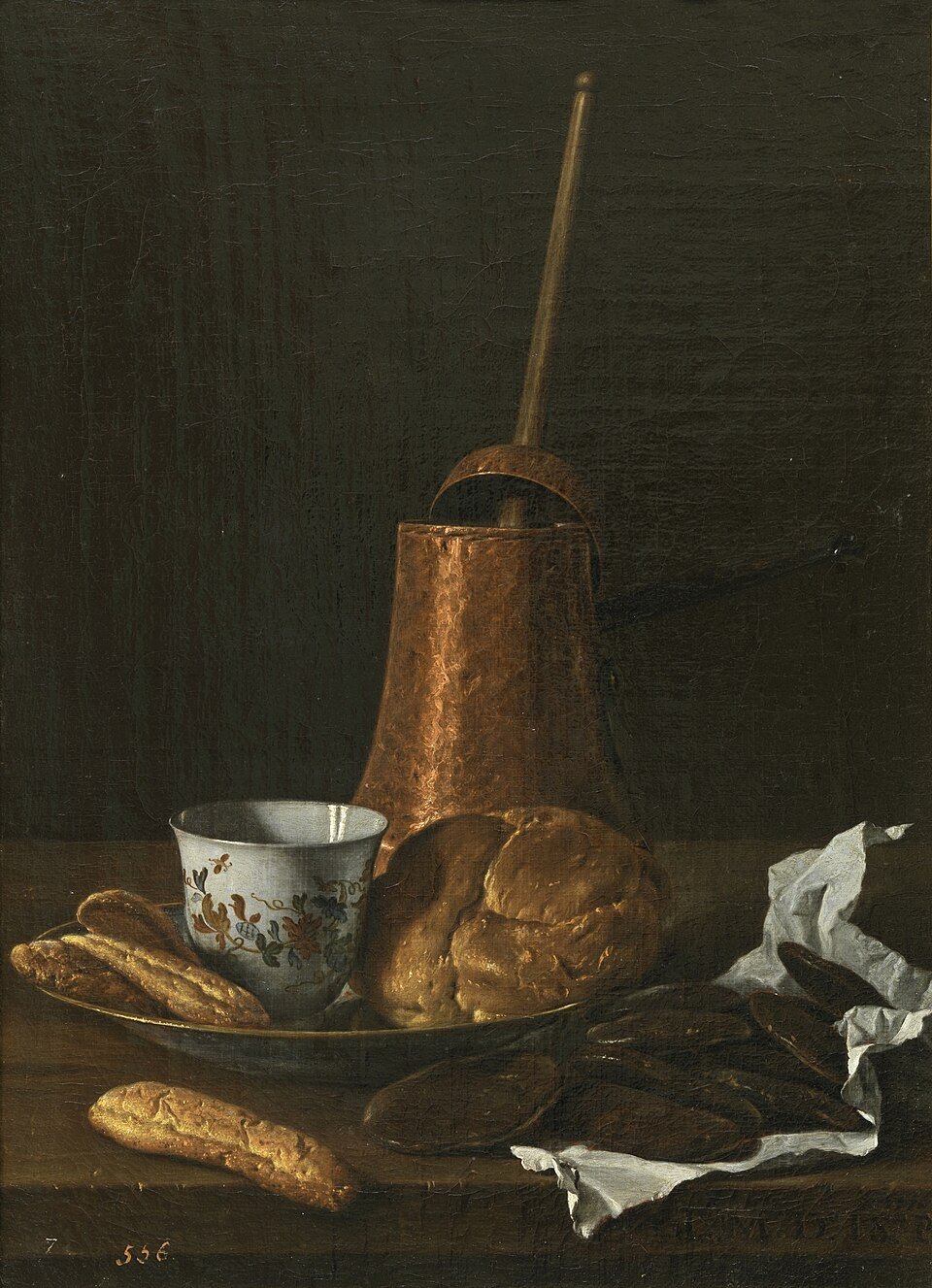
Still-life painting of chocolate service by Luis Melendez (1716–1780), circa 1760.
The 17th century also saw early technological developments in cacao processing, including grinding the beans and mixing them with sugar and spices. These innovations laid the groundwork for the evolution of chocolate as we know it today. Overall, it seems this century set the stage for cacao’s global spread and the complex economic, social, and cultural dynamics that would follow in the centuries ahead.
Southeast Asia
Cacao was also introduced to Indonesia by the Dutch East India Company in the early 17th century, with large-scale cultivation starting in Java in the 18th century. The volcanic ash-rich soils of Indonesia, similar to those in Mexico and Guatemala, proved ideal for cacao plantations. Initially, cacao was primarily grown to supply European markets.
The Dutch introduced many cacao varieties, creating a diverse palette of flavors and bean characteristics. While not overt slave conditions, indigenous peoples of Java worked for slave wages or no wages and worked themselves to the bone under strict conditions. Sumatra and Bali would follow with cultivation in the 18th and 19th centuries. Today, Indonesia is still one of the world’s largest cacao producers.
As is always the case, colonial expansion brought profound social, economic, and environmental upheaval. Indigenous farming systems were disrupted, landscapes transformed by large plantations, and forced labor inflicted immense suffering. Understanding this history is crucial so we do not keep repeating these mistakes today. In recent decades, Indonesia has seen a growing movement toward sustainable and specialty cacao production. Organic farming practices, improved fermentation and drying methods, and quality enhancement efforts are gaining true momentum. Additionally, government supported initiatives in Kalimantan (Borneo) work with Indigenous Dayak communities to promote sustainable cacao farming.
Africa
Cacao’s introduction to Africa occurred in the late 19th century when Portuguese colonizers transplanted cacao pods from Brazil to their colonies in West Africa, particularly in São Tomé and Príncipe.This was followed by the British, French, and Belgian colonial powers establishing cacao plantations in countries such as Ghana, Nigeria, Cameroon, Tanzania, and Uganda. Throughout the 20th century, Africa’s climate and land made it ideal for cacao production. Local farmers adopted modern agricultural techniques to boost yields, supplying many of the world’s largest chocolate manufacturers, including Nestlé, Cargill, and Mars.
West Africa is now the heart of global cacao production supplying about 70% of the world’s cacao, with countries like Côte d’Ivoire, Ghana, Nigeria, and Cameroon leading the way. This industry is crucial to the livelihoods of millions of smallholder farmers and national economies across the region. However, cacao farming in West Africa often traps farmers in cycles of poverty. Many smallholders receive only a small fraction of the profits from the global chocolate market and face challenges such as low prices, limited access to resources, and aging cacao trees that reduce yields.
The cacao sector in West Africa has also been marred by child labor and exploitative working conditions. Although international organizations and chocolate companies have pledged to eliminate child labor, progress has been slow and uneven, leaving many vulnerable workers at risk. Additionally, the expansion of cacao cultivation has contributed to deforestation and biodiversity loss in West Africa, creating environmental pressures that threaten the long-term sustainability of cacao farming.
Overall, cacao is central to West African economies and cultures, but it also highlights significant social, economic, and environmental challenges. Addressing these issues requires systemic change, including fairer trade practices, stronger labor protections, sustainable farming methods, and peacebuilding efforts to support farming communities and promote ethical chocolate production. Wild Chocolate by Rowan Jacobsen is a highly recommended read because it explores practical solutions for the challenges facing the cacao industry today. Jacobsen addresses the deep rooted issues of exploitation, environmental degradation, and social injustice yet highlights inspiring efforts to promote sustainable farming practices, fair trade, and the empowerment of local communities. Wild Chocolate offers a hopeful vision for a future where cacao cultivation respects both people and the planet. We need this if things are to change. And they need to.
The African cacao industry has faced very significant challenges and is a primary example of how the legacy of colonial era exploitation persists. Large multinational corporations continue to dominate the cacao trade in Africa at the expense of the human element. Increased global awareness and the efforts of conscious organizations are fostering more sustainable and ethical cacao production in some regions, promoting fair trade, improved labor conditions, and environmental stewardship. This demonstrates how our purchasing choices can support a better future for cacao and the people who grow it. At the same time, growing recognition of cacao’s remarkable health benefits is encouraging many to examine the cacao industry more closely. As people learn about cacao’s role in supporting heart health, mood, and overall vitality, there is rising interest in its effects and also in how it is grown, sourced, and brought to our tables. This renewed focus is driving important conversations about ethical production, sustainability, and the wellbeing of the communities and ecosystems behind the beans.
Chocolate Fever
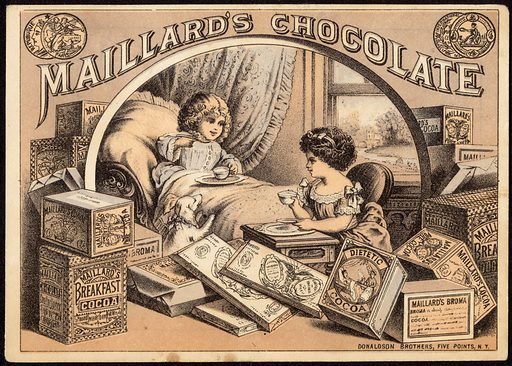
Maillard's Chocolate. Date: ca. 1870–1900. Sourced from Digital Commonwealth website.
Chocolate became widely available to the masses during the 19th century, thanks to key technological innovations and industrialization that transformed it from an exclusive luxury into a popular commodity. The invention of the cocoa press by Coenraad van Houten in 1828 revolutionized chocolate production by separating cocoa butter from cocoa solids, enabling the creation of smoother, more affordable chocolate products. Shortly after, in 1847, Joseph Fry developed the first modern chocolate bar by remixing cocoa butter, cocoa powder, and sugar, making chocolate easier to consume and mass-produce.
During the 19th and 20th centuries, several European countries emerged as leaders in the chocolate industry. Switzerland became renowned for its high quality milk chocolate, pioneered by Daniel Peter and Henri Nestlé, who combined cocoa with condensed milk to create the first milk chocolate in the 1870s. Belgium also rose to prominence with its artisanal craftsmanship and praline chocolates, establishing a reputation for luxury and innovation. Germany and France developed strong chocolate manufacturing sectors as well, contributing to the global spread and diversification of chocolate products.
These countries not only advanced chocolate production techniques but also established vast colonial networks to source cacao from tropical regions in West Africa, the Caribbean, and Southeast Asia, fueling the industry’s growth. By the 20th century, chocolate had become a beloved treat worldwide, enjoyed across social classes and celebrated in countless forms from bars and confections to beverages and desserts. Europe’s transition from elite indulgence to mass-market staple reflects the convergence of innovation, colonial enterprise, and cultural enthusiasm, setting the stage for chocolate’s global popularity today.
The global cocao market is thriving despite poor conditions for the farmers growing for mass production. There are no signs of the industry slowing down even though prices have skyrocked over the past two years. Cacao products are projected to expand from an estimated $57 billion in 2025/2026 to a substantial $96 billion by 2035. This is big business. Clearly we as humans love chocolate. But at what cost? These are important questions moving into the future. I will talk more about sustainable practices that are essential in my view. But first..let’s get into a little fun!! Chiaroscuro…is what runs through my mind…that interplay of light and shadow reflects life itself, where balance is a constant pursuit. Much like cacao, with its rich bitterness balanced by sweetness life calls us to find harmony amid contrasts. The task is to pull the darkness into the light for transformation.
The Science of Cacao
Heart Opening Chemistry and Remarkable Health Benefits
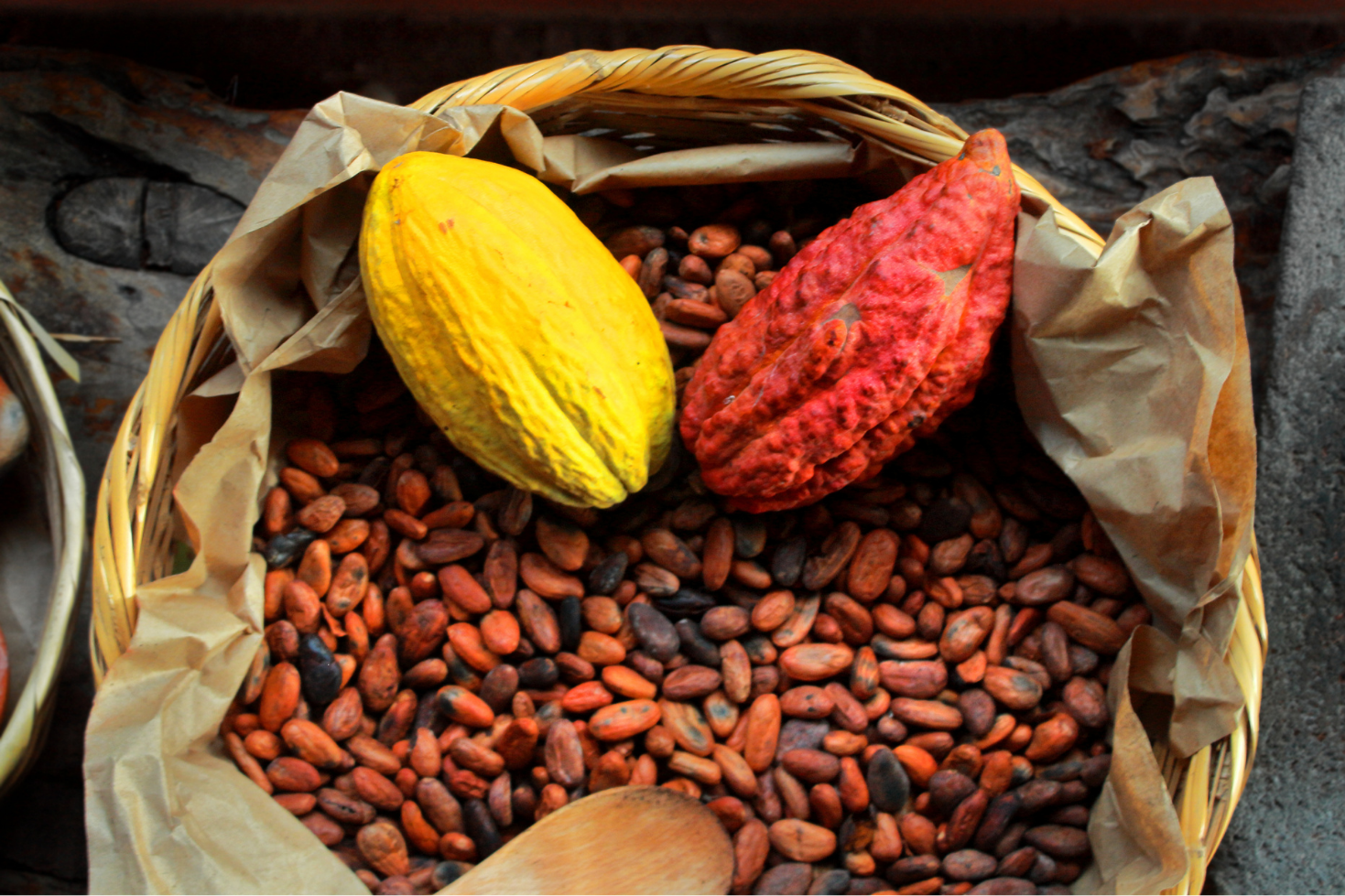
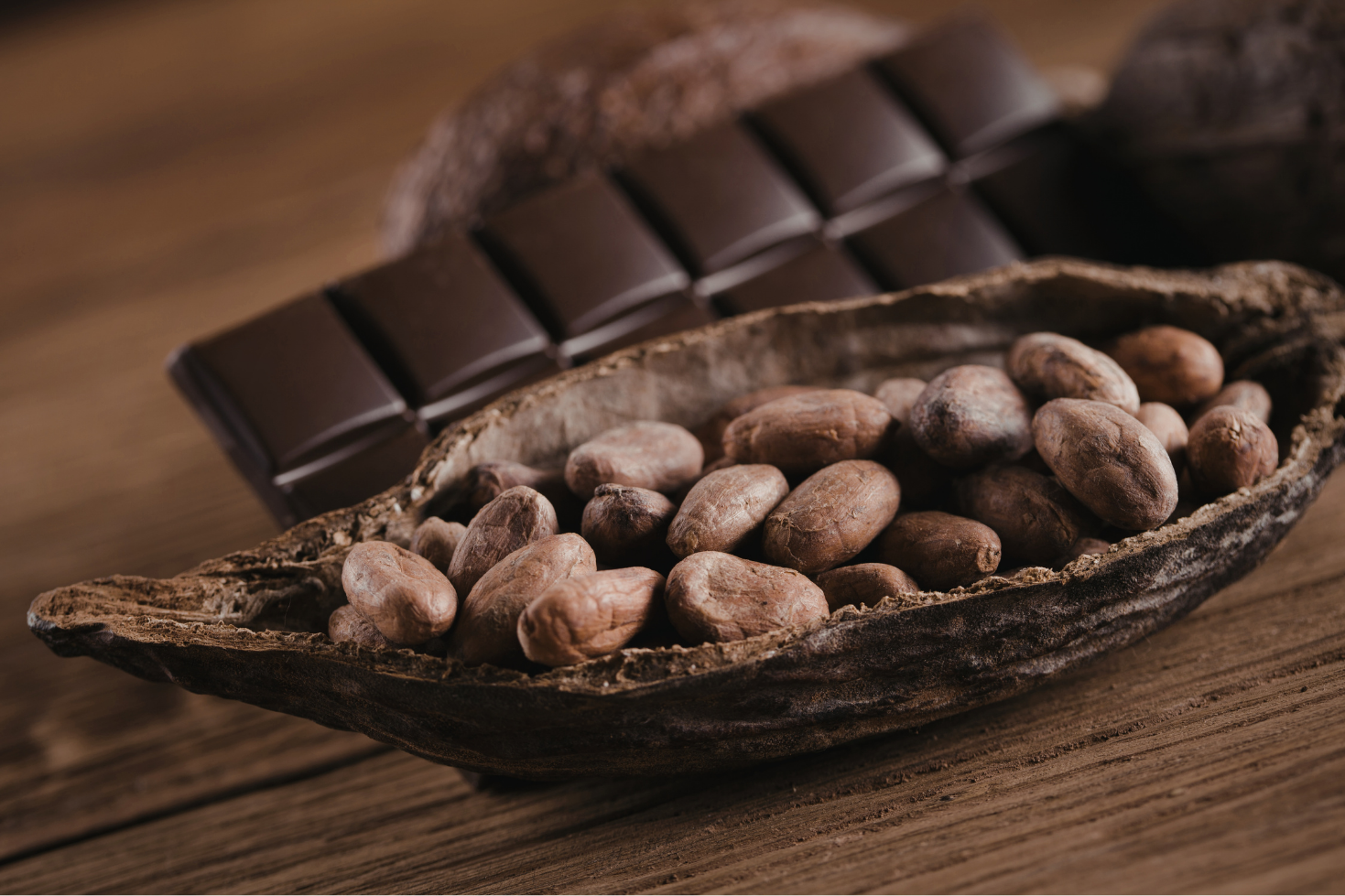
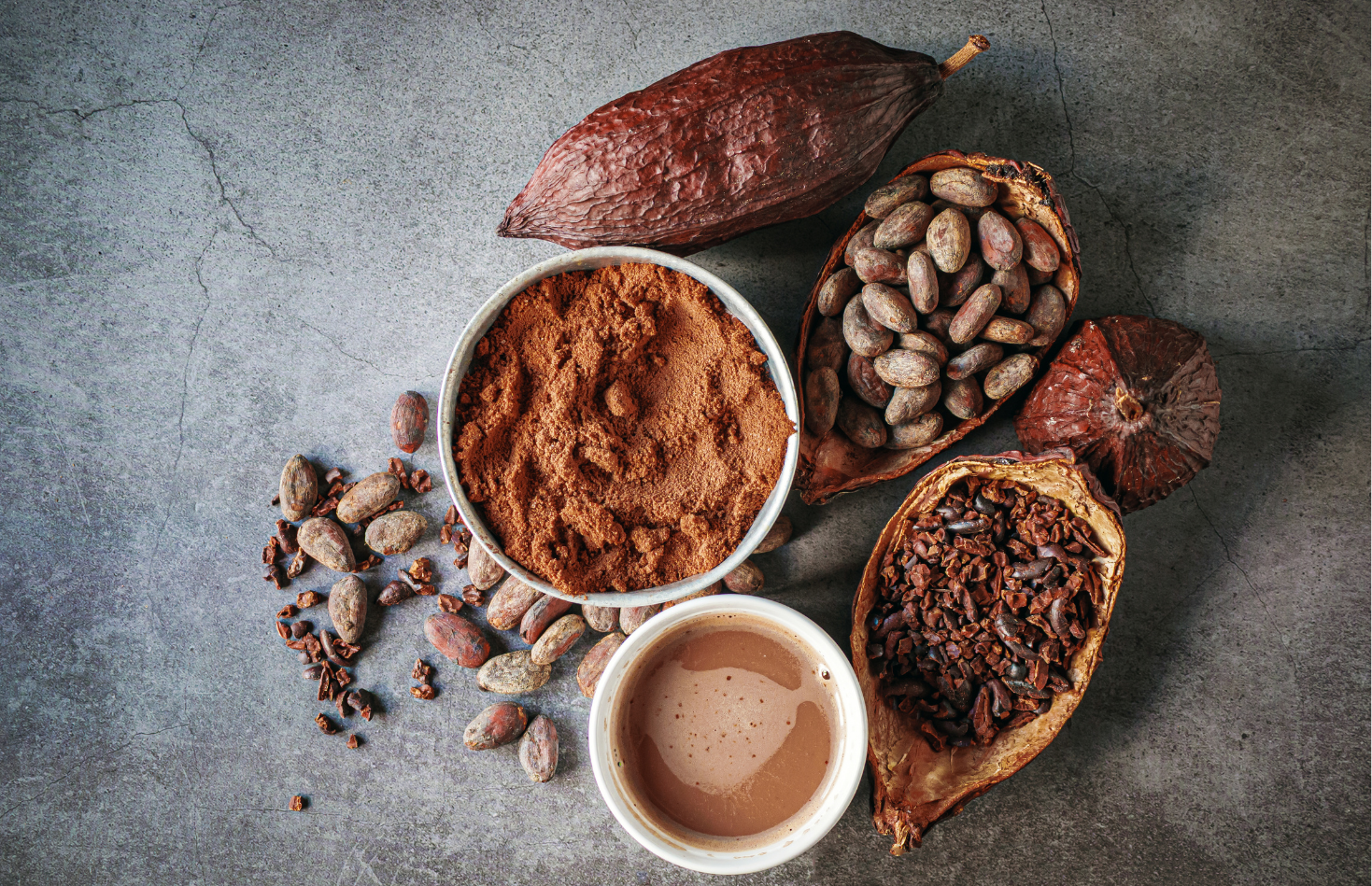
It never ceases to amaze me what plants can do and the extraordinary chemistry they do it with. And Cacao is truly a remarkable plant medicine in this regard, packed with a complex array of bioactive compounds that support physical, emotional, and spiritual wellbeing. So where to begin.
First and foremost, cacao is both a food and a medicine. A rare treasure that nourishes body and spirit alike. I especially appreciate herbs and plants that serve this dual purpose, and cacao is truly exceptional in this way. And we all know how awful it tastes. : ) : ) Though I will note and as you my have experienced…in its pure raw form, cacao can be intensely bitter and even challenging to the palette. But as you will see, its benefits in bitter form are also profound and worth savoring. Cacao is regarded as a bitter tonic herb in modern herbalism. Bitters are a category of plants known for their ability to help stimulate digestion, support liver function and gentle detoxification and promote overall vitality through their invigorating taste.
Polyphenols, Antioxidants, Vitamins and Nitric Oxide Oh My
Cacao is exceptionally rich in polyphenols, particularly flavonoids like epicatechin, catechin, and procyanidins. These powerful antioxidants fight oxidative stress by neutralizing harmful free radicals, protecting our cells from damage, and supporting graceful, healthy aging. Beyond this, cacao’s flavonoids improve endothelial function (endothelial cells line the circulatory system), which means they enhance the health and flexibility of blood vessels, reduce inflammation, and promote better circulation which are key factors in maintaining a strong cardiovascular system.
But cacao’s magic doesn’t stop there. It is a powerhouse of essential nutrients that support countless bodily functions. Magnesium fuels hundreds of enzymatic reactions, supporting muscle and nerve function, energy metabolism, and mood regulation. Iron is vital for transporting oxygen in the blood and generating energy. Zinc plays a crucial role in immune defense and healing wounds. Potassium helps regulate fluid balance and nerve signaling, keeping the body’s systems in harmony. Vitamins B1, B2, B3, and E contribute to stress resilience, energy production, skin health, and antioxidant protection. Cacao also contains trace elments of many other essential minerals.
This dense nutritional profile makes cacao not only a heart-opener in the emotional sense but a literal tonic for cardiovascular, nervous system and for neurological health. What a rockstar!!!! And it is important to have foods that provide great nutrition like this. Epecially in a world of crops devoid of vital and essential minerals and vitamins. My son and I discuss this often. He’s very interested in how the body and especially the brain are optimally nourished and protected as an American (a neuroscientist in training this boy) . I appeciate his interest because I have seen many times in my clinical practice that a host of health concerns folks have ranging from restless leg syndrome to arrhythmia to chronic fatigue can be linked to nutritional deficiency. One day he won’t have mom slicing up those rainbow carrots, supplying berries galore, whisking reishi cacao drinks or making those kale chips so its essential to convey how power plants like cacao are an accesible ally for him. For all of us.
““The pharmaceutical industry has spent tens, probably hundreds of millions of dollars in
search of a chemical that would reverse … [or ward off vascular diseases]. And God gave us flavonol-rich cocoa which does that.””
(Norman Hollenberg, quoted in Paoletti et al., Chocolate and Health, 2012)
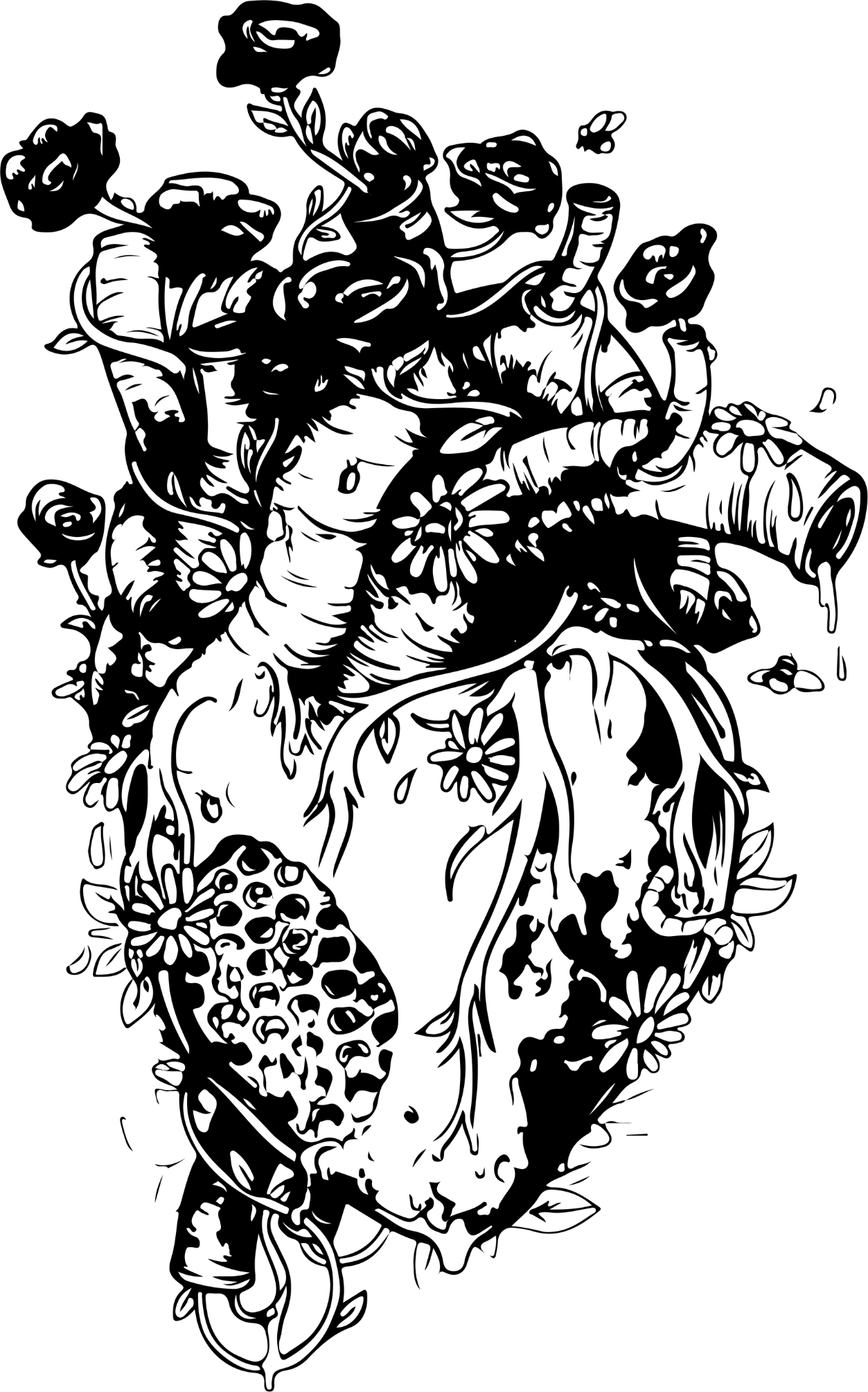
Heart Art from Creative Commons
Cacao is also exceptionally rich in polyphenols, especially flavonoids such as epicatechin, catechin, and procyanidins. These antioxidants combat oxidative stress by neutralizing free radicals, protecting cells from damage, and supporting healthy aging. The flavonoids also improve endothelial function. Further one of cacao’s most celebrated benefits lies in its ability to boost nitric oxide production in the body. Nitric oxide is a vital molecule that relaxes blood vessels, improves circulation, lowers blood pressure, and enhances oxygen delivery to tissues. This cardiovascular support helps reduce the risk of heart disease and improves overall vitality.
Cacao is a serious heart tonic wouldn’t you say?
Christian Rätsch, author of The Encyclopedia of Psychoactive Plants, offers his perspective on both cacao’s medicinal and psychoactive qualities which I always am drawn to given that humanity has co evolved with psychoactive plants over hundreds of thousands of years. He describes cacao as a gentle psychoactive plant medicine with heart-opening effects that go beyond just the physiology. While he states cacao’ offering differs significantly from classical psychedelics such as inducing intense visionary experiences, he postulates that cacao works gently to enhance mood, emotional openness, and spiritual receptivity. Yes and yes and yes it does. I would agree.
Rätsch also highlights some of those fascinating compounds responsible for cacao’s unique effects:
Theobromine, a methylxanthine alkaloid similar to caffeine, which produces mild stimulation and vasodilation, fostering alertness, expansion and a sense of wellbeing.
Anandamide, an endocannabinoid-like compound that can induce feelings of bliss and emotional warmth, contributing to cacao’s mood-elevating properties.
Phenylethylamine (PEA), commonly linked to feelings of love and euphoria, though Rätsch notes that its effects may be subtle due to rapid metabolism.
Flavonoids, while not psychoactive themselves, support brain function and cardiovascular health, enhancing cacao’s overall medicinal profile.
Tryptophan is an essential amino acid present in cacao that serves as a precursor to serotonin.
Here is a bit more about these special molecules and amino acids
Anandamide
Anandamide in particular is fascinating.Often called the “bliss molecule,” anandamide naturally interacts with the brain’s endocannabinoid system to promote feelings of joy, emotional warmth, and relaxation. What makes cacao especially unique is that it also contains compounds that inhibit the breakdown of anandamide in the body, allowing this mood-enhancing molecule to remain active longer in the brain. This dual action helps deepen cacao’s gentle but profound impact on emotional wellbeing and heart opening. Rätsch emphasizes that cacao’s effects arise from the synergy of these varied compounds, gently expanding the heart center and facilitating emotional healing rather than producing strong psychoactive states.
Phenylethylamine (PEA) in Cacao: The “Love Molecule
Phenylethylamine, often called the “love molecule,” is a natural compound found in cacao that plays a role in mood elevation and emotional bonding. PEA acts as a neuromodulator in the brain, promoting the release of neurotransmitters like dopamine and norepinephrine, which are associated with pleasure, alertness, and feelings of euphoria. Ummmm yes please. : )
Tryptophan: The Mood Regulating Amino Acid
Tryptophan is an essential amino acid present in cacao that serves as a precursor to serotonin, which we know as a key neurotransmitter for regulating mood, sleep, and emotional balance. The body converts tryptophan into serotonin, which helps promote feelings of calm, happiness, and wellbeing.This may help alleviate stress, anxiety, and depressive symptoms. This biochemical pathway complements cacao’s other mood enhancing compounds, making it a holistic emotional tonic.
Additionally, cacao supports brain health by improving blood flow to the brain, enhancing cognitive function, memory, and focus. Its anti-inflammatory and neuroprotective properties may help guard against neurodegenerative diseases. Cacao’s fiber content aids digestion and promotes gut health, which is increasingly recognized as foundational to overall wellness.
Cacao is also a deeply nourishing ally for women’s health throughout life’s stages from menstruation to fertility to menopause. During and beforemenstruation, its rich magnesium content helps relax uterine muscles, easing cramps and helping to reducePMS symptoms, while its natural mood enhancing compounds support emotional balance. When it comes to fertility, cacao provides essential minerals like magnesium, iron, and zinc that support reproductive function and hormonal balance. Its antioxidants improve blood flow, nourishing reproductive organs and promoting a healthy uterine environment. Additionally, cacao’s mood lifting properties help reduce stress, which can positively influence fertility. As women enter menopause, cacao’s flavonoids support cardiovascular health and cognitive function, while its gentle stimulation and mood benefits help ease emotional fluctuations. Cacao absolutely serves as a holistic tonic for women nurturing women’s physical and emotional wellbeing through every phase of life.
Emerging research also suggests cacao’s antioxidants may play a role in cancer prevention by protecting cells from DNA damage, reducing inflammation, and supporting the immune system’s ability to fight abnormal cell growth. While more human studies are needed, cacao’s rich nutrient profile makes it a promising ally in reducing cancer risk as part of a balanced diet.
An Ayurvedic Lens
Through the Ayurvedic lens on which my herbal work is based, one’s own contistution and unique balance of the doshas will impart how to best work with cacao. For ease I will look at cacao in its raw form. Ayurveda is an ancient holistic healing modaliy from India and I cling to it (for many reasons) but also because of its logical deductive reasoning connected to the taste of herbs(foods), their actions, their energy and their long term post digestive effect.
Raw Cacao
Rasa (Taste): Bitter and astringent
Virya (Energy): Heating (ushna), which stimulates digestion, circulation, and metabolism.
Vipaka (Post-digestive effect): Pungent which is heating and drying
Guna (Qualities): Light (laghu), dry (ruksha), and slightly oily (snigdha) due to its natural fats.
These combined qualities mean raw cacao is stimulating and warming, with a bitter and astringent taste that can dry, lighten and heat the system.
For those with a dominant or sensitive Vata constitution, eating raw or very bitter cacao alone might increase dryness, anxiety, or restlessness. To enjoy cacao harmoniously, it’s important to balance its bitter and drying qualities with sweet, oily, and warming ingredients such as natural sweeteners like honey, maple, date sugar or jaggery, creamy milks or plant-based fats, and warming spices like cinnamon, cardamom, orange peel, or ginger along with sweet harmonizing herbs like rose, vanilla and some fruits. These additions help soothe Vata, enhance digestion, and transform cacao into a true tonic that supports vitality.
For Pitta predominant folks, cacao’s warming energy can sometimes feel stimulating or aggravating, so moderation is key. Ayurveda sees it as somewhat rajasic probably due to its theobromine/caffeine content and all that sexy PEA magic. : ) Thus Cooling spices such as fennel, vanilla, mint or rose water can help balance cacao’s heat for Pitta individuals.
Kapha constitutions generally benefit most from raw cacao’s stimulating and warming effects, which can uplift sluggishness and support metabolism. Pairing it with light, warming pungent spices helps avoid excess heavy qualities found in some cacao and chocolate products. Kapha individuals may need to be more mindful of cacao products combined with sugars, starches and fats which can increase kapha.
Please note that an Ayurvedic lens does not mean that we should avoid cacao. In moderation and consumed with one’s constitution in mind, Cacao has a remarkable ability to support a healthy lifestyle and nurture ojas which is the subtle essence of vitality and immunity. When prepared mindfully with nourishing ingredients, cacao supports mental clarity, emotional well-being, and physical resilience qualities central to having strong ojas.
From Cacao to Chocolate
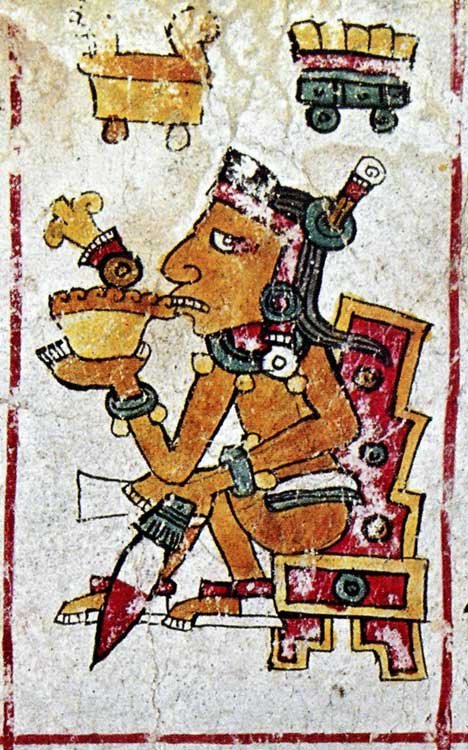
This image is a scene from the Codex Borgia, a pre-Columbian Mesoamerican divinatory manuscript. It depicts a figure, often identified as the god Tepoztecatl, consuming a ceremonial chocolate drink from a ceramic bowl. This scene illustrates the importance of cacao among the Aztecs, where chocolate was a bitter, spicy beverage enjoyed by nobility and warriors rather than a sweet treat. Cacao beans were highly valued in Aztec culture, sometimes used as currency, and considered a divine gift from the gods
The journey from cacao to chocolate is a fascinating blend of tradition, culture, and craftsmanship, deeply rooted in Indigenous practices long before chocolate became a global commodity. For Indigenous peoples of Central and South America, cacao was and still is a sacred plant, central to ceremony, spirituality, and social life. Indigenous communities, such as the Maya and Aztec, prepared cacao primarily as a ceremonial beverage rather than the sweetened chocolate bars and confections we know today. The process began with harvesting ripe cacao pods, extracting the beans, and fermenting them for several days. This fermentation was crucial for developing the complex flavors and reducing bitterness.
After fermentation, the beans were dried in the sun, then roasted over open fires, which deepened their aroma and flavor. The roasted beans were then cracked and winnowed to remove the shells, leaving cacao nibs. These nibs were ground into a thick paste using stone tools like metates flat grinding stones, creating what is known as chocolate liquor or cacao paste. According to my herbal sister Lupo who is in Costa Rica right now, she told me the indigenous Bri Bri still employ this method of preparation. I intend to see this myself next February when I return to Costa Rica with my son : ).
I digress….ha! So this paste was mixed with water and often flavored with spices such as chili peppers, vanilla, and annatto. The resulting beverage was frothy, bitter, and spicy, served cold or warm depending on the occasion. It was consumed during rituals, as offerings to gods, in royal courts, and at social gatherings. The frothing was achieved by pouring the drink back and forth between vessels, a practice that enhanced its texture and symbolic significance. European colonizers encountered this beverage in the 16th century and brought cacao back to Europe, where it was sweetened with sugar, cinnamon, and vanilla to suit European palates. Over time, technological innovations transformed cacao into solid chocolate. As stated above, the 19th century saw key inventions like the cocoa press, which separated cocoa butter from solids, and the creation of milk chocolate by combining cocoa with condensed milk.
Despite these changes, many Indigenous communities continue traditional cacao preparation for ceremonial and cultural purposes, honoring cacao’s sacred origins. These practices emphasize cacao’s role as a bitter tonic, a spiritual medicine, and a connector of community.
Aroma Magic
Cacao is very rich in aromatic compounds. Terpenes are aromatic compounds that play a key role in shaping the complex aroma and flavor of Theobroma cacao. Some of the most important terpenes found in cacao include limonene, which brings fresh, citrusy notes; linalool, known for its sweet, floral, and lavender-like scent; and geraniol, which adds rose-like floral sweetness. Nerolidol contributes woody and slightly citrusy undertones, while alpha-pinene offers a fresh, pine-like aroma. Beta-caryophyllene adds spicy, woody, and peppery nuances, enriching cacao’s flavor profile. (Aromaweb) The presence and concentration of these terpenes depend on factors such as cacao variety, growing conditions, and post-harvest processes like fermentation and drying. Together, these terpenes create the distinctive and layered sensory experience that sets fine cacao apart, influencing how chocolate tastes and smells.
Cacao’s rich and complex aroma also comes from a diverse mix of chemical compounds beyond just terpenes. Esters contribute fruity and sweet notes, often evoking tropical fruits, berries, or apples, and these develop primarily during fermentation. Pyrazines are key to the roasted, nutty, and earthy aromas that give chocolate its warm, comforting scent, forming mainly during roasting. Aldehydes add floral, green, and sometimes almond-like scents, enhancing the freshness and complexity of cacao’s aroma. Various alcohols also contribute sweet and fruity nuances that often overlap with ester aromas. Organic acids, such as acetic acid, provide a sharp, tangy brightness that balances sweetness and adds vibrancy to the overall scent. Phenolic compounds bring bitterness and astringency but also add smoky and spicy notes that deepen the sensory experience. Together with terpenes, these compounds create the multidimensional aroma that makes chocolate such a rich and evolving sensory delight from bean to bar. I always want to convey as an Aromatherapist that scent is medicinal and as you have likely experienced with cacao..also bliss inducing.
Ways to Work with Cacao
Raw Cacao Nibs
Raw cacao nibs are the purest form of cacao you can enjoy. These crunchy pieces of crushed cacao beans retain the bean’s full spectrum of nutrients. They are rich in antioxidants, magnesium, and mood-enhancing compounds like theobromine. Eating nibs offers a direct, earthy connection to cacao’s natural essence and provides a gentle energy lift and mental clarity without added sugars or processing.
Dark Chocolate
High-quality dark chocolate, especially with 70% or more cacao content, offers a delicious and accessible way to enjoy cacao’s health benefits. While more processed than raw nibs or ceremonial cacao, it still contains antioxidants, flavonoids, and minerals that support heart health and mood. Dark chocolate can be a comforting treat that nourishes both body and soul, making cacao’s gifts available in everyday moments.
Cacao Powder
Versatile and nutrient-rich when minimally processed, cacao powder can be used in cooking, baking, and beverages. It invites creative culinary exploration from smoothies and hot chocolate to desserts and savory dishes making cacao an adaptable ingredient for wellness and pleasure both.
When selecting cocoa powder, it’s best to choose minimally processed or natural varieties, as these retain more antioxidants, flavonoids, and essential nutrients compared to Dutch-processed options. Organic certification is also important, ensuring the cocoa is grown without synthetic pesticides or fertilizers, which supports environmental health and often results in better flavor. Opting for single origin or traceable sources can further guarantee higher quality and support sustainable farming practices.
Cacao Butter
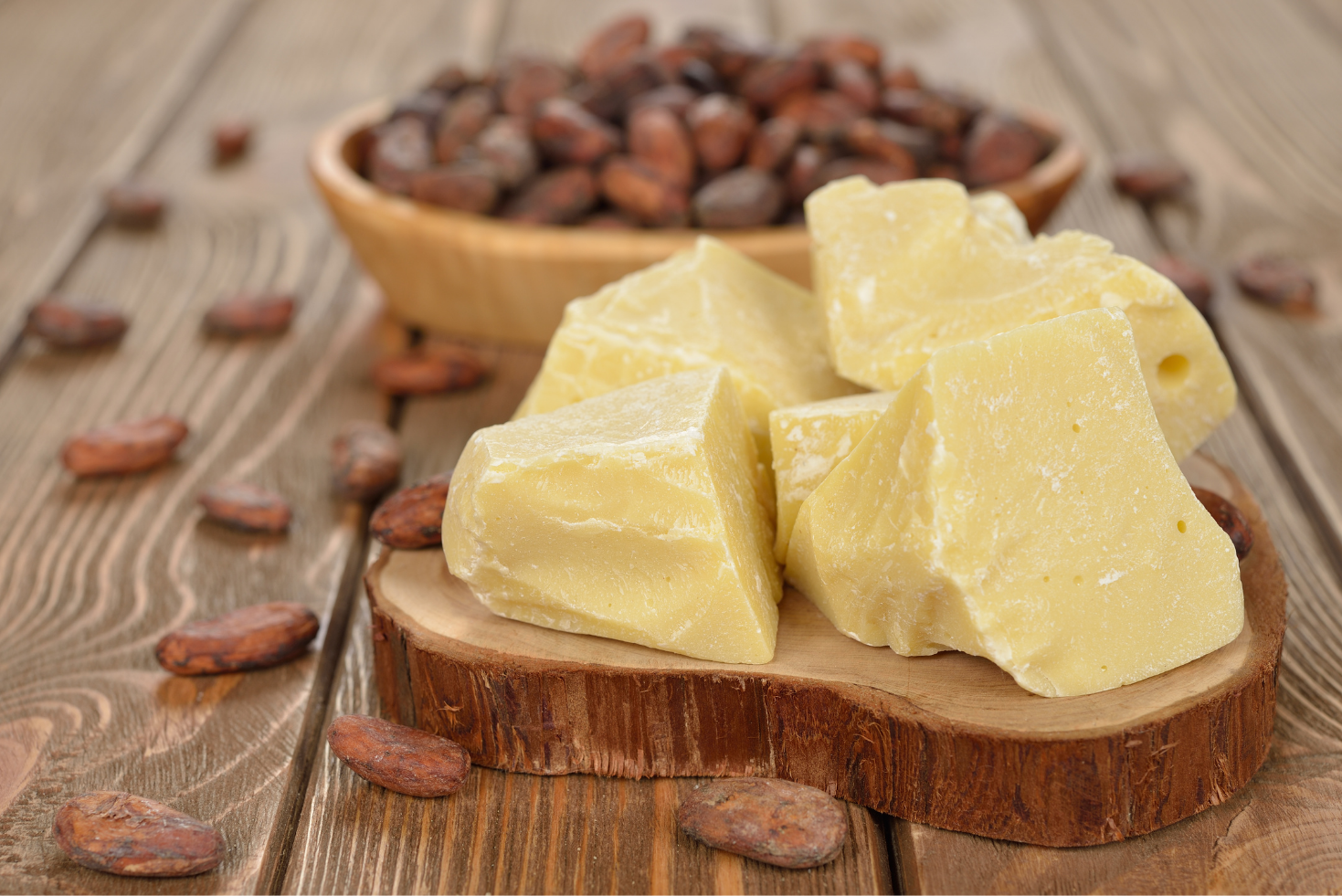
Extracted from cacao beans, cacao butter is prized both in culinary and skincare uses. It carries a subtle chocolate aroma and nourishes the skin, often featured in natural beauty products. In cooking, it adds richness and smoothness to chocolate confections and desserts.
Rich in healthy saturated and monounsaturated fats, it supports skin health, hormone production, and provides a stable source of energy. Unlike many fats, cocoa butter contains stearic acid, which has a neutral effect on cholesterol. It also holds antioxidant properties that help protect cells from damage. I use it in my body butters and they always come out extra wonderful and sooo silky smooth with cocoa butter added.
Ceremonial Cacao
Ceremonial cacao is distinct for its intentional sourcing and minimal processing, often made from heirloom or single-origin beans harvested using traditional, sustainable methods. It is often stone ground to preserve the bean’s full nutritional profile. Unlike highly processed chocolate products that lose much of their natural nutrients, ceremonial cacao retains its rich array of antioxidants, vitamins, minerals, and healthy fats. This preservation of nutrition means ceremonial cacao provides potent health benefits, including mood enhancement, heart support, and gentle stimulation. Consumed in ritual settings or personal practice, ceremonial cacao transforms the simple act of drinking into a sacred experience of expansion, connection and transformation.
I pause here because I have taken a particular interest in this form of cacao that is now all the rage in spiritual communities. Alongside commercial production, cacao’s role as a sacred plant medicine and teacher is experiencing a renaissance. Is it good? Are we appropriating? These are big questions. I will say from what I’ve seen, many modern cacao ceremonies draw inspiration from Indigenous traditions, creating intentional spaces for emotional healing, spiritual awakening, and community connection. These ceremonies use ceremonial grade cacao intentionally to help people gently open the heart, deepen mindfulness, and foster presence. Participants often describe these experiences as transformative journeys that reconnect them with themselves, others, and the earth. Its traditional preparation honors cacao as a sacred plant medicine, making it both a nourishing and spiritually uplifting experience.Prepared mindfully as a warm, liquid elixir, it serves as a heart-opening medicine that gently stimulates the nervous system, inviting emotional healing, presence, and spiritual awakening.
I do believe I am living testimony to this. I thought I knew cacao intimately, but I do not think I understood the depth of the medicine. I recently experienced my own profound ceremonial journey with sacred select rare Peruvian cacao that invited me into deeper presence, emotional healing and transformational spiritual awakening. I am not even I am the same person as I was before this night. Truly. And strangely, even though I have been part of cacao ceremonies before, this last experience was a much deeper initiation. I have my theories on why but as folk herbalist I also gander its not for me to know but for me to experience. The plants inform as they see fit.
Image
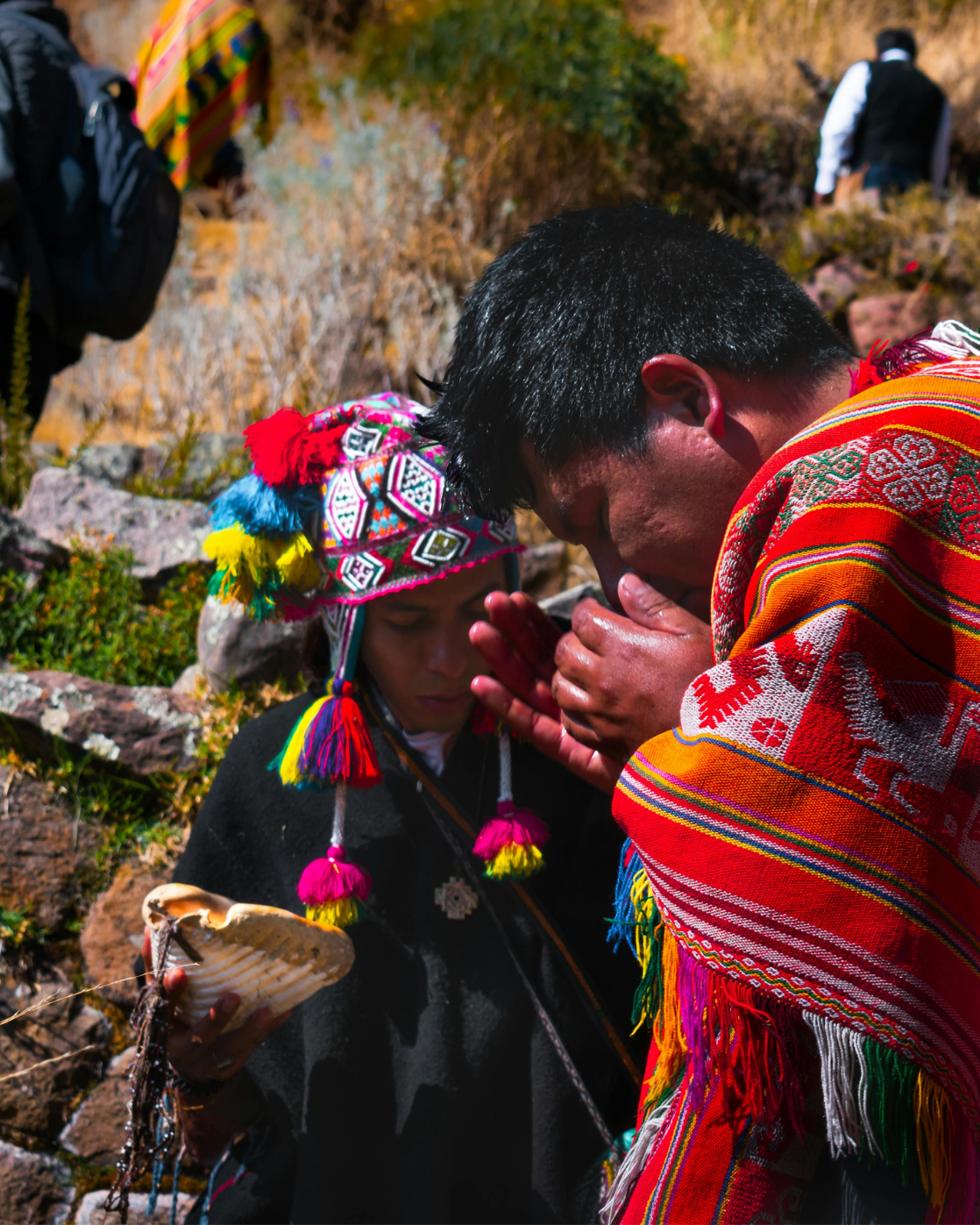
This image captures a traditional Qero ceremony in the Peruvian Andes. (from the creative commons)
Saying this I believe it is vital to approach cacao ceremonies with deep respect and cultural sensitivity to avoid appropriation. These sacred practices originate from Indigenous peoples whose knowledge and relationship with cacao have been nurtured over millennia. Engaging with cacao medicine ethically means honoring this lineage by acknowledging its origins, supporting Indigenous communities, and approaching ceremonies with humility and intention rather than commodification or superficial use. For some, even the term ceremonial cacao is a trigger though I see it as a distinction as to the quality, preparation method and the hands that prepared it for consumption.
Participating in a cacao ceremony today is a personal and communal act of honoring cacao’s ancient lineage while adapting its power for contemporary wellness and self exploration. By treading softly and ethically, we can help preserve the sacredness of cacao and the wisdom it carries, ensuring it continues to nourish hearts and communities for generations to come.
Sourcing and Stewardship
As stewards of plant medicine, ethical sourcing is essential to honor cacao’s spirit and ensure its bright future. This means:
No Slave Labor.
Supporting Indigenous and smallholder farmers who safeguard biodiversity and cultural traditions.
Choosing organic, shade-grown cacao to protect delicate ecosystems and minimize chemical use.
Avoiding industrial monocultures that contribute to deforestation, social injustice, and environmental harm.
Educating ourselves and others about cacao’s origins, cultural significance, and ethical supply chains.
Championing regenerative agriculture that restores degraded lands, enhances soil health, and promotes carbon sequestration.
By aligning with these principles, we help preserve cacao’s rich legacy and nurture a more just and sustainable future for this sacred plant and the communities who have cared for over the centuries.
Sourcing
Within Theobroma cacao, there exists extraordinary genetic and flavor diversity that reflects the ecosystems from which these varieties originate, as well as centuries of cultivation and adaptation. The main genetic groups include:
Criollo, often called the “noble” cacao, is prized for its delicate and complex flavors, featuring notes of nuts, caramel, and floral undertones. This variety is rare and highly valued for its refined taste.
Forastero is the most widely cultivated cacao worldwide, known for its robust, hardy nature and stronger, earthier, sometimes more bitter flavor profile.
Trinitario is a hybrid of Criollo and Forastero, combining the flavor finesse of Criollo with the resilience of Forastero. It is commonly grown in regions such as Trinidad and Tobago.
Flavor profiles vary greatly depending on genetics, terrain and processing methods, ranging from fruity and floral to earthy, spicy, nutty, or smoky. My advice is to taste as much cacao as delights you. Look for the source of the cacao and take note of what excites you.
I have come to fall in love with a particularly precious variety of cacao called Nacional which is native to Ecuador and Peru. It is connected to an ancient lineage and posesses unique qualities. Genetic studies trace its ancestry back over 5,500 years, with evidence suggesting it was first domesticated by the ancient Mayo-Chinchipe Marañon civilization in Ecuador. Once thought to be extinct following disease outbreaks in the early 20th century, pure Nacional genotypes are now extremely rare due to interbreeding with other varieties. But they do exist. Nacional cacao is celebrated for its complex and bold flavor profile, featuring floral, herbal, and tropical fruit notes with very little bitterness. Its cultural significance runs deep, as indigenous cultures. Choosing Nacional cacao supports the preservation of this rare variety and contributes to sustainable, ethical farming practices that benefit local communities.
With that being said, I am honored to soon offer small-batch drinking cacao here at Flower Power sourced from this almost-lost variety. This is from cultivated cacao from a single mother Nacional tree (now cloned) in Peru. This cacao comes from a collective of native growers committed to regenerative farming and agroforestry practices as well as honoring the growers with the true respect they deserve. Each farmer receives prices ten times higher than fair trade rates. In the meantime while I struggle with my sometimes anticapitalist spirit, if you live in Vermont and want to share a cup of this sacred cacao…please do reach out and we can enjoy the bliss together. It would be a pleasure. And I figure if you read this far you might also love fine quality ancient cacao. : )
And ofcourse, You can source cacao from a variety of vendors all around the world and if desired, directly from indigenous collectives such as Kallari and CORPEI in Ecuador and ACOPAGRO in Peru. I have also read beautiful things about Finca Nueva Amanecer in Guatamala which is an indigenous Mayan women's collective of cacao production. I am certain there are many many more indigenous groups we could work with. I am set on helping promote such cacao production because these collectives prioritize environmental stewardship, cultural heritage, and honor cacao as the living being it is. And through us supporting them it helps ensure that cacao remains a living indigenous tradition and a source of livelihood for those who steward cacao now and into future generations.
Cacao and Chocolate: Warnings, Contraindications, and Heavy Metal Safety
While cacao and chocolate offer many benefits, it is important to be aware of certain warnings and contraindications. Some individuals may experience sensitivity or allergic reactions to cacao, including headaches, digestive upset, or increased heart rate due to its natural stimulants like caffeine and theobromine. People with certain health conditions such as acid reflux, anxiety disorders, or heart arrhythmia should consume cacao cautiously and consult a healthcare provider if unsure.
Another important concern is heavy metal contamination. Cacao plants can absorb heavy metals like cadmium and lead from contaminated soil, which may accumulate in cacao beans. Consuming chocolate or cacao products with high levels of these metals over time can pose health risks, including kidney damage and neurological effects. To minimize risk, choose cacao and chocolate products tested for heavy metals, preferably from reputable brands committed to safe, sustainable farming practices.Being informed helps us enjoy cacao’s benefits safely while supporting responsible sourcing and production.
Well, I could certainly go on and on about this brilliant bean. There is so much more to say and explore. But for now, I’ve shared what I can, and I know I will add more over time. Below, you’ll find a carefully selected and in depth bibliography and some recipes to support your own journey with cacao. ❤️
Writing this blog post has truly deepened my fascination and devotion to this sacred tree. And I hope that this written exploration has sparked new thoughts for you, inspiring you to welcome this extraordinary food, medicine, and soul ally into your life in some way. I’m not entirely sure what I will do next with cacao, but I do know it’s time to plan a pilgrimage to sit beneath the cacao trees to listen and learn from them directly.
From its ancient origins in the Amazon and its revered role as a heart medicine among Indigenous peoples, cacao truly is a supreme teacher. One that enchants, delights, and inspires profound transformation from within. As we honor its rich history and embrace its invitation to open the heart deeply even knowing the painful challenges of its global journey, we are called to welcome in cacao’s multifaceted gifts. From its extraordinary health benefits to its power to help us expand and connect, cacao invites us to engage with it consciously as a guide, a healer, and a sacred companion.By choosing ethically sourced and sustainably grown cacao, we support the wellbeing of the farmers, communities, and ecosystems that nurture this medicine. Whether through ceremonial practice or simple mindful enjoyment, cacao calls us to open our hearts more fully to ourselves, to others, and to the earth.
In these times of change and evolution, may cacao be a gentle yet powerful guide, nourishing our courage, compassion, and joy as we step into new levels of wellness and connection. Cacao is a botanical treasure like no other. We are truly blessed beyond measure to have her.From my heart to yours, and from our hearts to the heart of the jungle in the Amazon, may we always remember that the plants are our dear friends along the journey of life. Thank you so much for reading my story of precious, potent and brilliant cacao.
Recipes
Traditional Xocolatl Recipe
Ingredients:
2 cups water
2 tablespoons pure cacao paste or minimally processed ceremonial cacao
1 teaspoon ground chili powder (adjust to taste)
1 teaspoon ground cinnamon
1 teaspoon ground achiote (optional)
Pinch of sea salt
1 tablespoon toasted cornmeal or masa harina (optional, for traditional texture)
Instructions:
Heat the water in a pot until hot but not boiling.
Add the cacao paste and whisk until fully melted and smooth.
Stir in chili powder, cinnamon, achiote (if using), and salt.
If using cornmeal or masa, whisk it in gradually to avoid lumps.
Simmer gently for 5-10 minutes, stirring occasionally.
Traditionally, the drink was poured between vessels to create a frothy top—try pouring between two cups or using a frother.
Serve warm, savoring the rich, bitter, and spicy flavors.
Add sweetener and omit the masa if you want a more traditional tasting drink.
SuperFood Herbal Cacao Truffles
Ingredients
1/2 cup (55 grams) raw almonds, or walnuts or pecans
4.5 ounces (126 grams) pitted Medjool dates (about 8 large or 1/2 cup packed)
3 tablespoons (15 grams) raw organic cacao powder plus more for coating
2 tsp(27 grams) lucuma or if you do not fancy this then cinnamon and ginger powder(1 tsp each)
2 teaspoons (33 grams) -your choice of 1 adaptogenic herb like maca root, ashwagandha, shatavari, or mucuna powder
Coatings
Cocoa powder
Finely chopped nuts
Rose Powder
Coconut
Coconut sugar
Light dust of Cinnamon powder
Instructions
Chop the nuts in a food processor by pulsing the machine then process to a fine meal. Take note to not process so long that the nuts become butter.
Add the dates, cacao powder, spices if desired, lucuma, maca or other adaptogen, and process until the mixture looks like fine crumbs. The mixture will not be a paste, but it will hold together when pressed between your fingers. If the dough is too dry to shape, add a small amount of water and process.
Spoon the dough into a bowl. Scoop out 1-tablespoon portions and press until the dough is firm. Roll into balls with the palms of your hands.
Roll the truffles in cocoa powder, finely chopped nuts or even coconut sugar.
Refrigerate for 1 hour to allow the flavors to develop before serving. Enjoy these truffles at room temperature or chilled. The truffles will stay fresh for a few weeks if they are frozen.
Bibliography
Argout, Xavier, et al. (2011). “The Genome of Theobroma cacao.” Nature Genetics, 43(2), 101-108. https://www.nature.com/articles/ng.736 *Nice pdf download of this work.
Carrasco Vargas, R., & Cordeiro Baqueiro, M. (Year). The murals of Chiik Nahb Structure Sub 1-4, Calakmul, Mexico. [Journal Name], [Volume(Issue)], pages.
Coe, Sophie D., and Michael D. Coe. The True History of Chocolate. Thames & Hudson, London, 1996.
Colli-Silva, M., & James, E. (2024). Phylogenetic evidence reshapes the taxonomy of Cacao and its allies (Theobroma and Herrania; Malvaceae, Byttnerioideae). Brittonia.
Grivetti, Louis E., and Howard-Yana Shapiro, editors. Chocolate: History, Culture, and Heritage. Wiley-Blackwell, 2009.
Harvard T.H. Chan School of Public Health. “Chocolate and Health.” https://www.hsph.harvard.edu/nutritionsource/food-features/dark-chocolate/.
Henderson, D. J., et al. (2007). “Chemical Evidence for Ancient Cacao Use in the Upper Amazon.” Proceedings of the National Academy of Sciences, vol. 104, no. 48, pp. 18937-18940. https://www.pnas.org/content/104/48/18937
Kohn, Eduardo. How Forests Think: Toward an Anthropology Beyond the Human. University of California Press, 2013.
Lad, V., & Frawley, D. (1986). The Yoga of Herbs: An Ayurvedic Guide to Herbal Medicine. Lotus Press.
Motamayor, J. C., et al. (2008). “Geographic and Genetic Population Differentiation of the Amazonian Chocolate Tree (Theobroma cacao).” PNAS, vol. 105, no. 7, pp. 2652-2657. https://www.pnas.org/content/105/7/2652
Patchett, Marcos E. B. The Secret Life of Chocolate. University of California Press, 2014.
Many Thanks for the link to Chapter 4 found fully in Herbal Gram http://abc.herbalgram.org/site/DocServer/Secret_Life_of_Chocolate-Pharmaceutical_Chocolate.pdf;jsessionid=00000000.app20115a?docID=9984&NONCE_TOKEN=76F56562C800ADF3689B83B9C68CB7AD
Powis, T., et al. (2011). “Early Cacao Use in the Americas.” Journal of Archaeological Science, vol. 38, no. 8, pp. 1783-1794. https://www.sciencedirect.com/science/article/pii/S0305440310001783
Presilla, Maricel E. The New Taste of Chocolate: A Cultural and Natural History of Cacao with Recipes. Ten Speed Press, 2009.
Rätsch, Christian. Encyclopedia of Psychoactive Plants: Ethnopharmacology and Its Applications. Park Street Press, 2005.
Sampeck, Kathryn E. “Cacao Biology, Chocolate Culture: A Superfood.” ReVista: Harvard Review of Latin America, 2016.
Schultes, Richard Evans, Albert Hofmann, and Christian Rätsch. Plants of the Gods: Their Sacred, Healing, and Hallucinogenic Powers. Healing Arts Press, 2001.
Schultes, Richard Evans, and Robert F. Raffauf. Plants of the Northwest Amazonia: Colombia and Ecuador. Dioscorides Press, 1990.
Schultes, Richard E., and Robert F. Raffauf. The Healing Forest: Medicinal and Toxic Plants of the Northwest Amazonia. Dioscorides Press, 1990. This is an important book.
Schultes, Richard E. “The Role of Ethnobotany in the Search for New Drugs.” In CIBA Foundation Symposium 65: Ethnobotany and the Search for New Drugs, 1979.
Schultes RE, 1984. Amazonian cultigens and their northward and westward migration in pre-Columbian times. Papers of the Peabody Museum of Archeology and Ethnology 76, 19–37.
Schultes, Richard Evans. “PLANTAE COLOMBIANAE II.” Botanical Museum Leaflets, Harvard University, vol.10, no. 10, 1942, pp. 301–324.
Schultes, R.E. 1953. Plantae Austro-Americanae VIII: de plantis principaliter vallis Amazonicis novis vel criticis notae diversae. Botanical Museum Leaflets 16: 57–95.
Schultes, R.E. 1958. A synopsis of the genus Herrania. Journal of the Arnold Arboretum 34: 217–278.
Schultes, R. E. (1958). A synopsis of the genusHerrania.Journal of the Arnold Arboretum,39(3), 217–295.https://www.biodiversitylibrary.org/part/19112